When the Fog Clears
Ten Days on the Island festival
Curated by Loren Kronemyer
Franklin Watershed, Lutruwita/Tasmania
21-30 March 2024

When the Fog Clears
Rosie Hastie
Amber Koroluk-Stephenson
Nadege Philippe-Janon
Joshua Santospirito
Mat Ward
Ursula Woods
Mists of the Huon Valley perform a seductive dance, gently obscuring and revealing contours of the fertile land and waters. Situated in The Watershed Franklin, When The Fog Clears features six artists from lutruwita / Tasmania exploring the region’s iconic mists through a variety of mediums including installation, sculpture, illustration, sound, and video. Developed exclusively for Franklin, this exhibit extends from the waterfront itself into the chambers, kilns, and rafters of the shed, inviting visitors to consider fog as an atmosphere that can cloak us in unexpected ways.
Works:
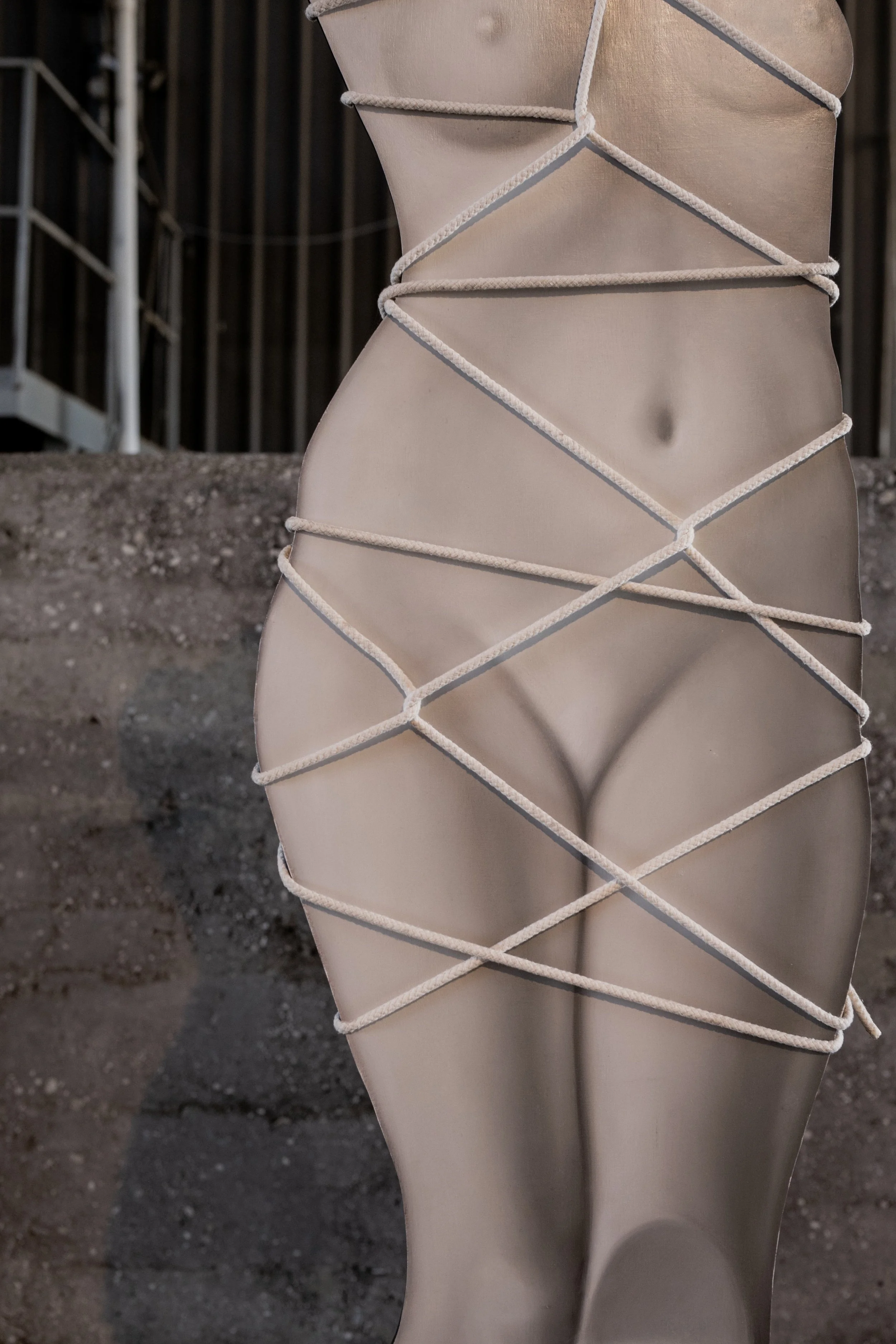
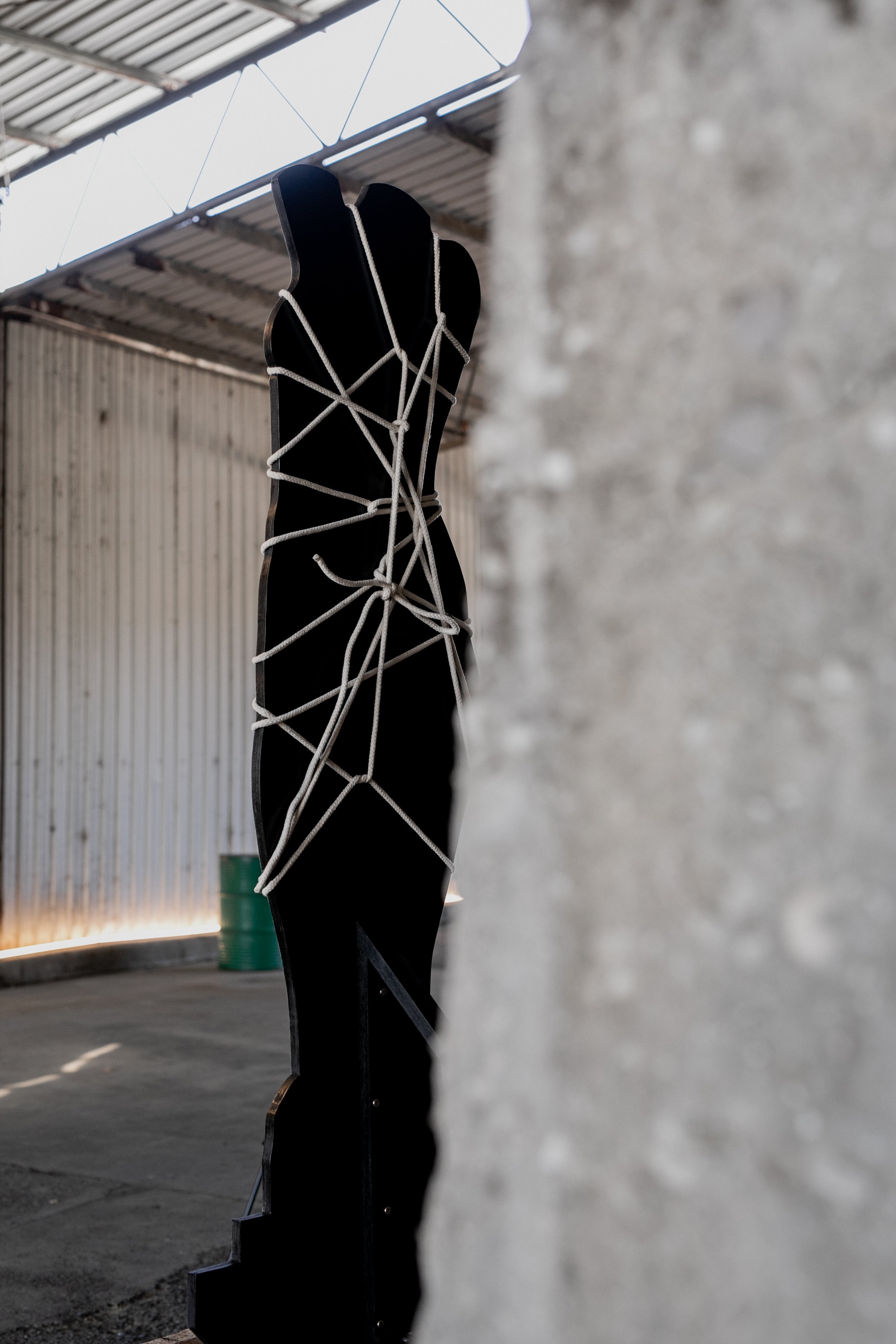
‘Bound, after Raynor Hoff and Man Ray’, 2024-2025, oil on ebonized marine plywood, cotton rope, Tas oak, metal fixtures, dimensions variable.
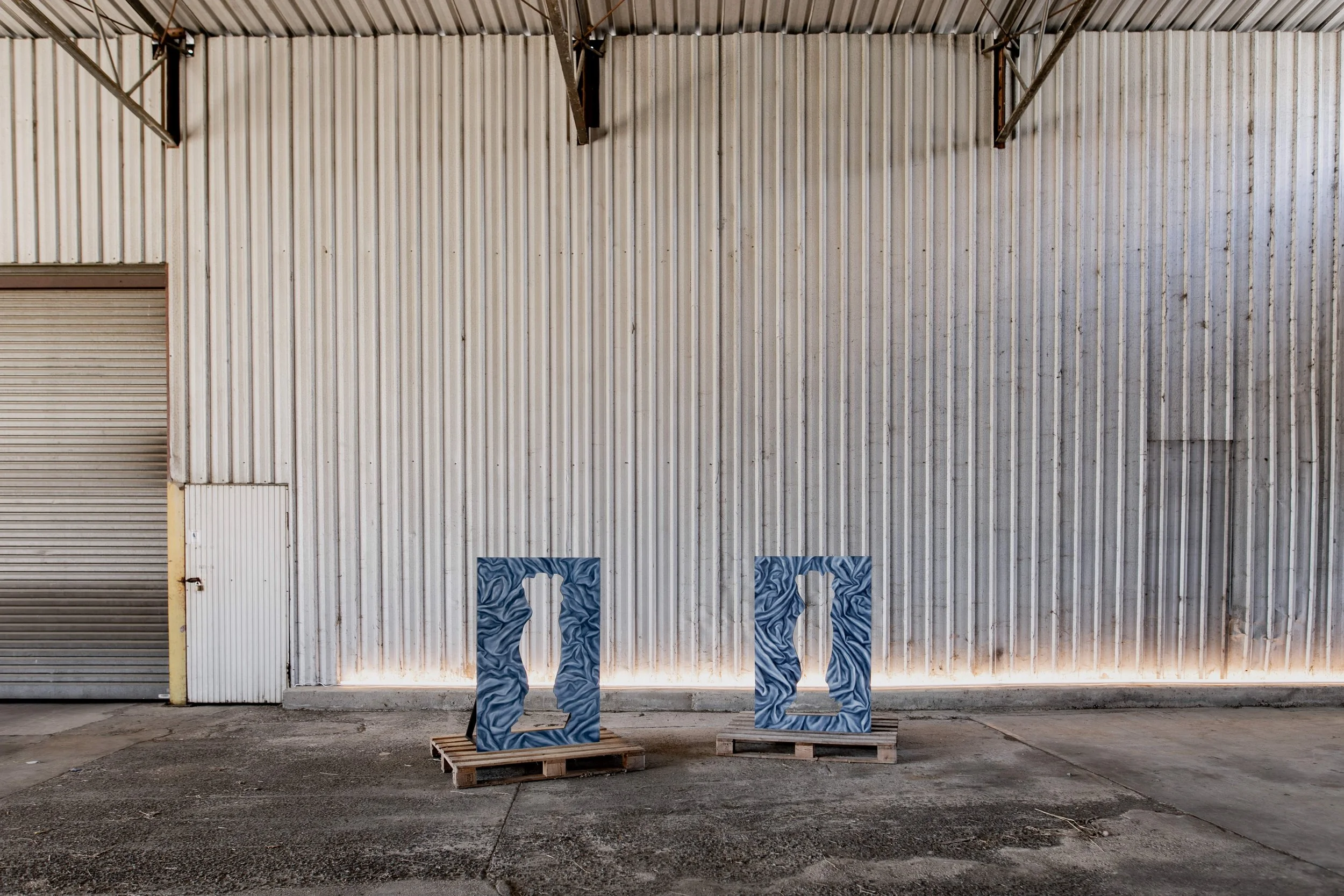
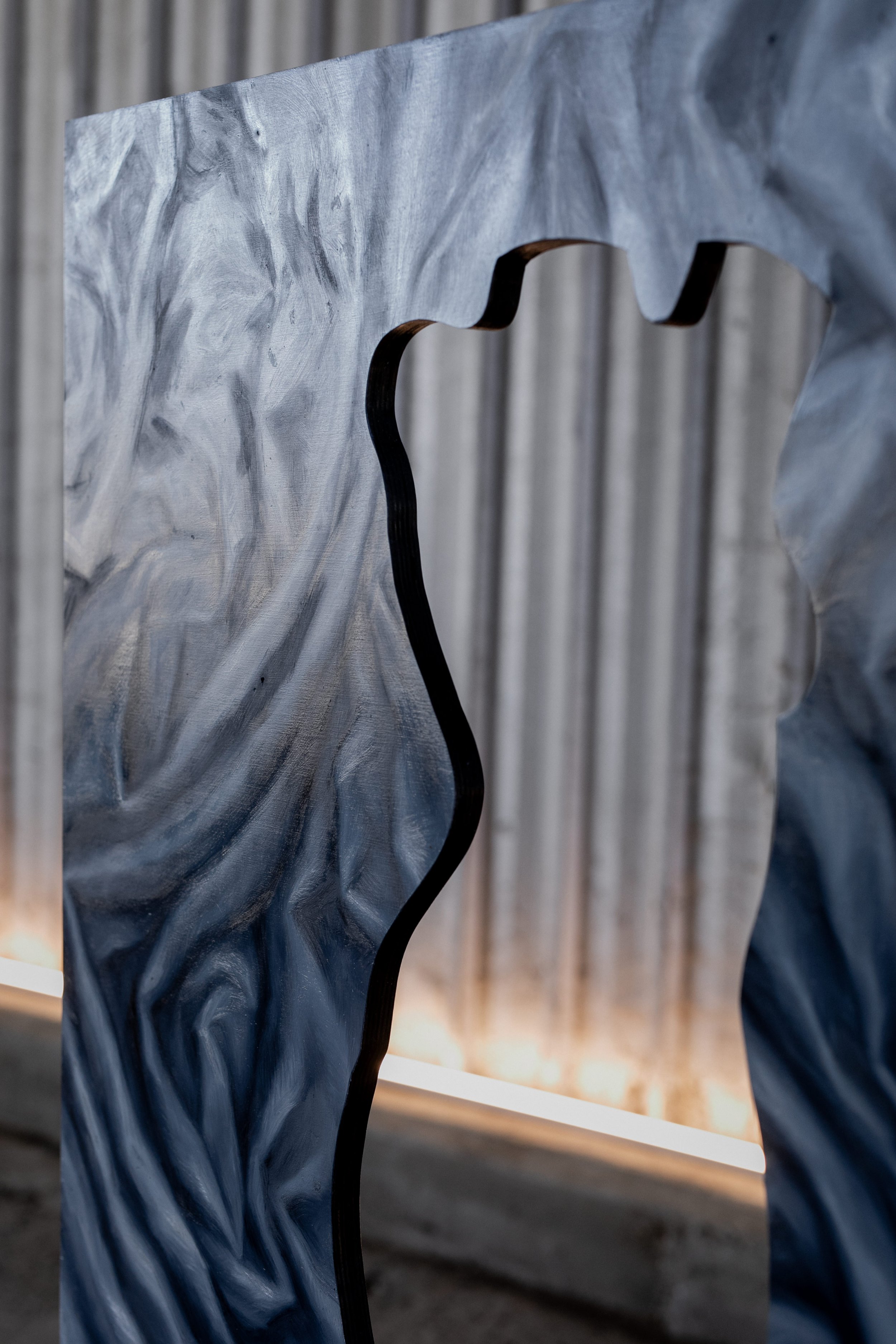
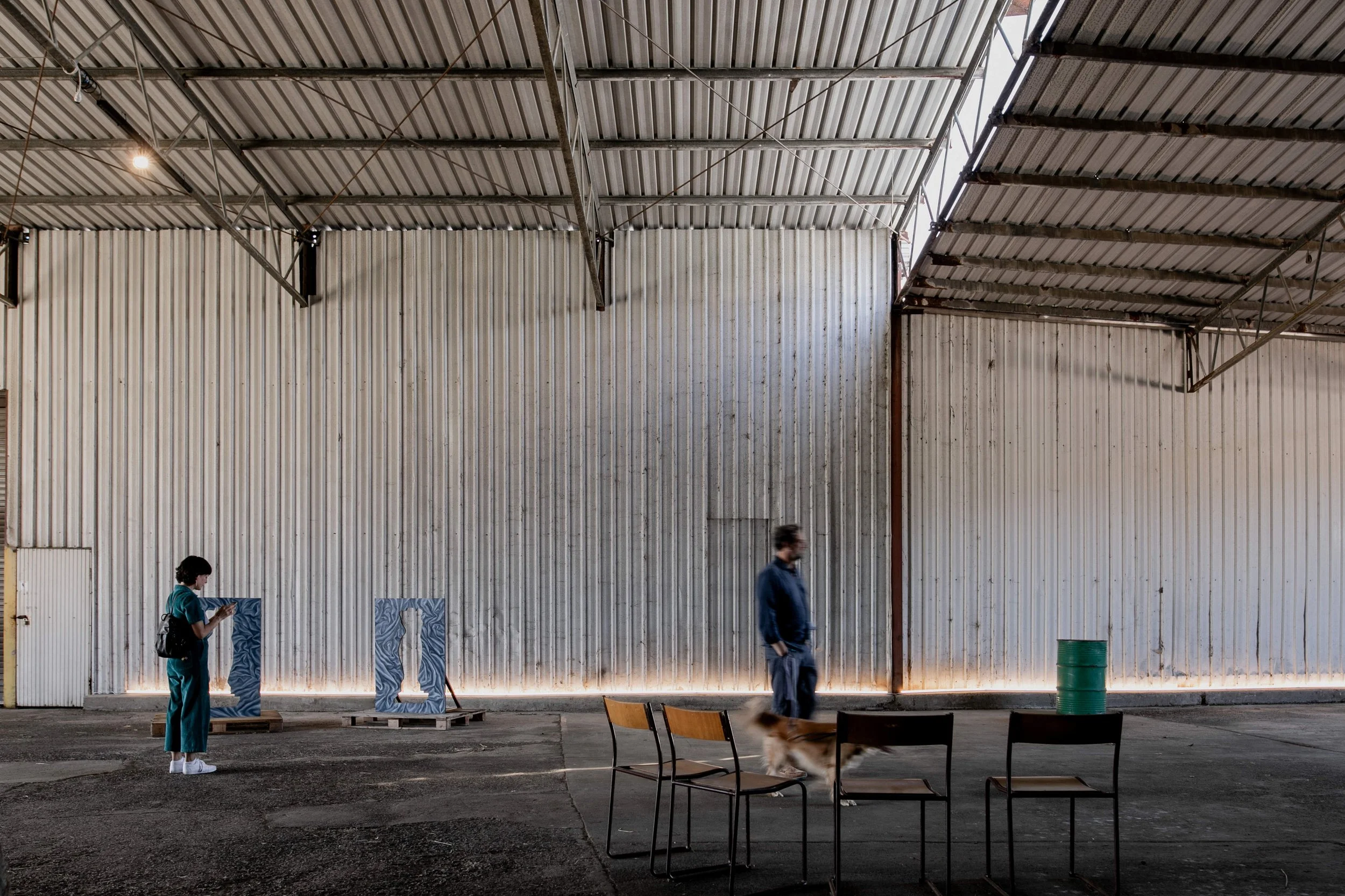
‘Veilings, after Raynor Hoff’, 2024-2025, oil and synthetic polymer on ebonized birchwood plywood, Tasmanian oak, metal fixtures, dimensions variable.
Artist Statement
‘Bound, after Raynor Hoff and Man Ray’ is an extension of Koroluk-Stephenson’s fascination with Rayner Hoff’s sensual ‘Australian Venus’ (1927), a work at the heart of Hoff's attempt to bring European forms to the modernist project in Australia. The work re-presents Hoff’s classic nude as a trussed figure, also referencing Man Ray’s ‘Vénus restaurée’ (Venus Restored, 1936) and suggesting metaphors of submission and fragmentation. Reworking Hoff and Ray, the ‘Bound’ Venus is a two-dimensional veneer, critiquing the constructed nature of femininity and its role as muse, metaphor and ideal within European art histories and the imperfect attempt to appropriate its meanings within Australian contexts.
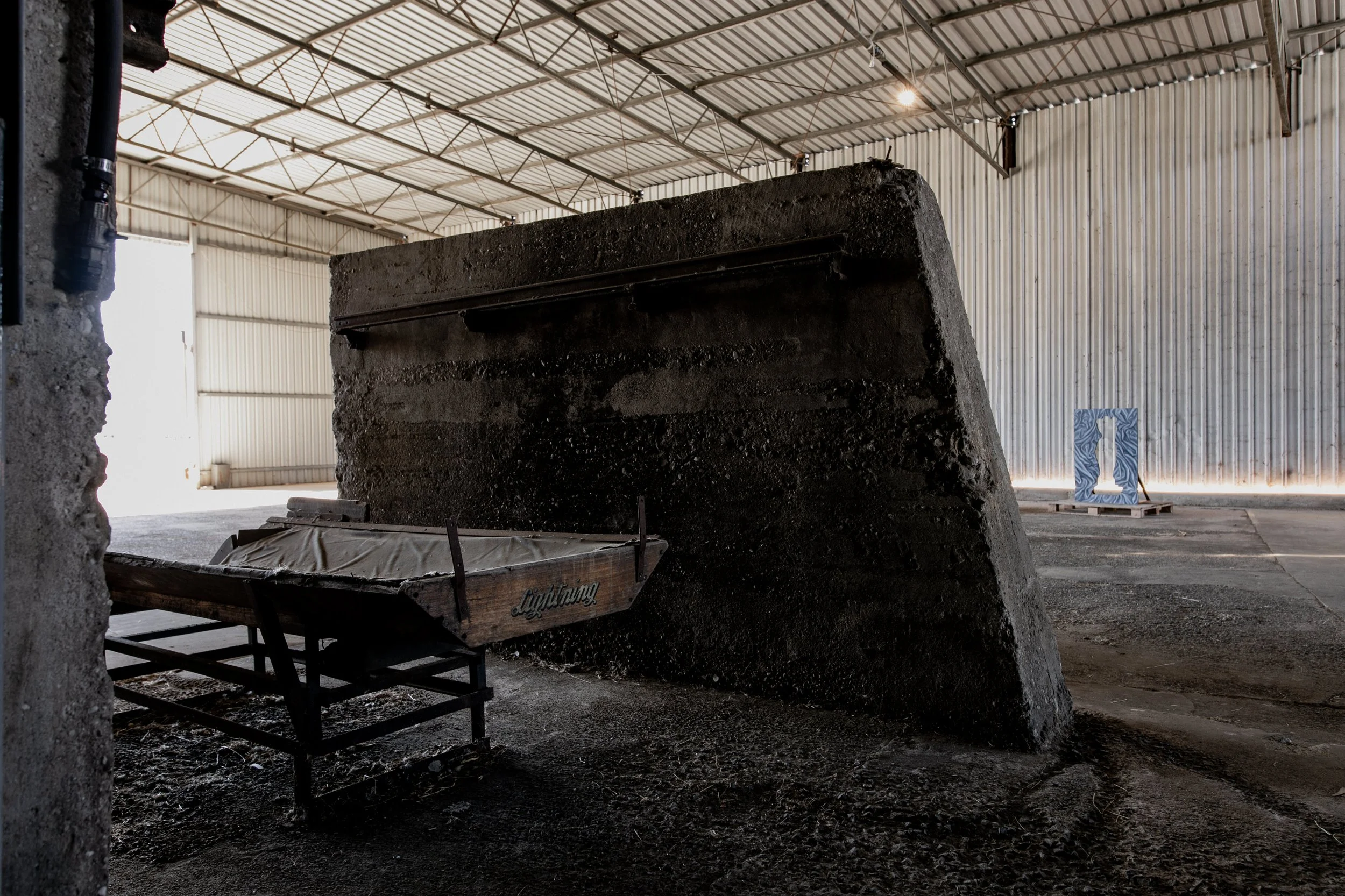
Presented as part of the exhibition ‘When the Fog Clears’ (Ten Days on the Island, 2025) the work was installed in the Watershed in Franklin, a now defunct apple evaporation shed on the Huon River that serviced the region’s apple industry between 1898 and the early 2000s. In this site, the meanings of the Venus extend to the industry of the region, drawing associations between Venus and the beauty of the surrounding environment, particularly the mountain ranges colloquially referred to as Sleeping Beauty. The work also explores the symbolic meanings of apples as they are linked to the feminine, in particular to Venus’s prize-winning beauty, and to the colonial histories of lutruwita/Tasmania as a primary natural resource and adopted symbol of the state’s prosperity. ‘Bound’ Venus hints at these histories but she is precarious on her pedestal, highlighting the problematic nature of such colonial claiming and naming of places in the lutruwita/Tasmanian landscape, and exposing the feminine as a cultural construct exploited for its symbolic links to nature and fertility.
‘Veilings, after Raynor Hoff’, extends this appropriation of Hoff’s Venus figure, presenting her as a void, cut out of the field of vision, a disembodied silhouette or negative space. Smaller in stature than the larger-than-life 'Bound' Venus, these works are edged in frames of blue fabric, a reference to domestic interiors, the divine feminine or curtains used for framing a stage. In the context of the exhibition, ‘Veilings’ highlights the feminine as a space for exploring aesthetic tensions of revealing and concealing, effects that are integral to the visual effects of fog as a natural phenomenon. Mounting the works on old timber palettes highlights the industrial history of the Watershed site whilst further emphasising tensions between fertility and industry and the labour of extracting natural resources.
Written by Eliza Burke
Catalog essay: the banks of the river do not grieve separation
Written by Selena De Carvalho, February 2025
Vapour hovers, beautifully spooky, an illusion above sleek water bodies. Flying rivers snake through gullies. Darkness lays down cool air, the warmth of the water rises to kiss the sky, unbridled by gravity's magnitude, a steamy embrace. Catching the high wind, ragged slopes crest gentle valleys and sleeping beauty winks at ozone above the fog cloaked dance.
This sometimes ghost disappears, evaporating in the heat of daylight. A spirit unbreathed. A world undressed. The Mighty Huon’s nocturnal exhale, alive in a quiet sort of way. Somehow under darkness the rules are different and I could ride on this carpet of fog to the never-never.
I think of all the 5:30am mornings when I’ve swung over the saddle, moon riding low on the hilltop, winding descent into the mist. A disappearing act. Slipping through the atmospheric veil between worlds, I enter the valley. The now rare event of snow on mountains in winter, splashing warm water on the windscreen, ice crackling, disco lights strobe the white lines, alerting drivers of the potential frozen tarmac. Roadkill still life. Tasmanian gothic.
Silently these low clouds have watched me heave sorrows like stones into the water. Purging grief, gulping the weight of it, drowning on dry land, knee deep in blady grass and black swans. Who even cares if my hands are blistered from clinging to the sun. Yellow tufted blooms of wattle ragged in the post rainy hues, the long dawn of a watercolour sunrise bleeding off the page.
Without judgement, the river swallowed them whole, not even a ripple. Above this mist swirling surface, a bone thin stick breaks the tension reaching skyward, beckoning like a mirage.
This valley has been beyond kind. Cradling my transition between youth and adulthood, witnessing my becoming a woman, a mother – when the babe spilled from my body in the tiny shack on the hill, when the rent was just $40 a week and the water was warmed by the crackling fire combustion stove, and the rainforest felt like it could eat us all in the dark shadows of winter. Through the seasons. Birds returning, days that run faster than ripped stockings towards the big hot summer energy. When the backwaters were backwaters - not pinned destinations and the neighbours were gun tote’n, dart smoking characters, ironically it was a refreshing sort of an out breath, because the permission this extended to all be ourselves was a raw, gritty kind of a realness. She’s seen me wallow and seen me shine... maybe she will see me crone, like the apple trees when they struggle to produce even one leaf, let alone a flower.
The river flows on, a community centre, the centre of community, she draws us in, parting the land with a steady rapid flow, the banks do not grieve separation, instead they give rise to a third bank, this misty dancer who carries messages across the divide.
Photography by Cassie Sullivan

This project was Produced by Constance in partnership Ten Days on The Island, and supported by Arts Tasmania and Huon Valley Council.