Sea Above, Sky Below
Produced by Rosny Farm
The Schoolhouse, Rosny Farm, Lutriwita/Tasmania
21 November - 14 December 2025
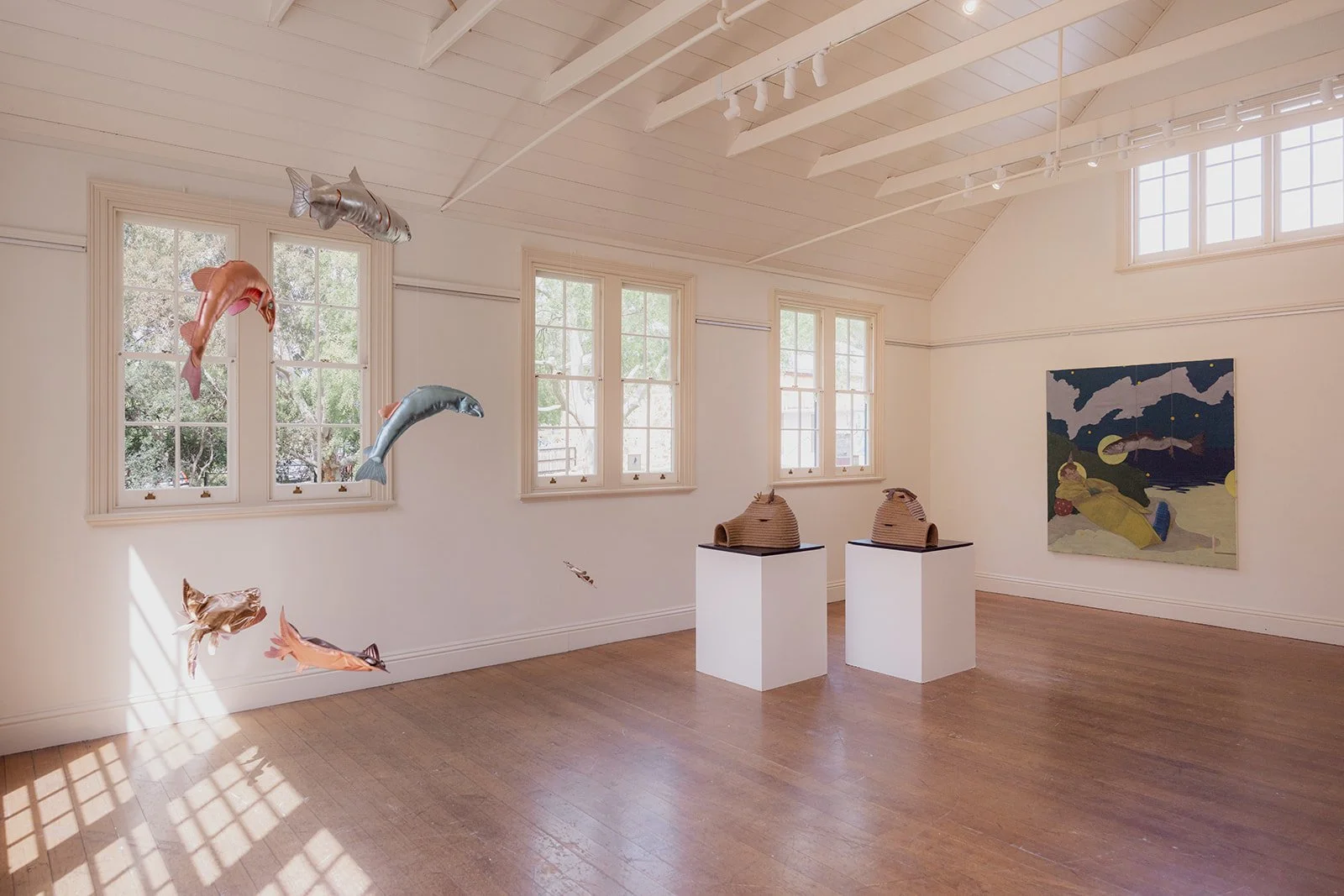
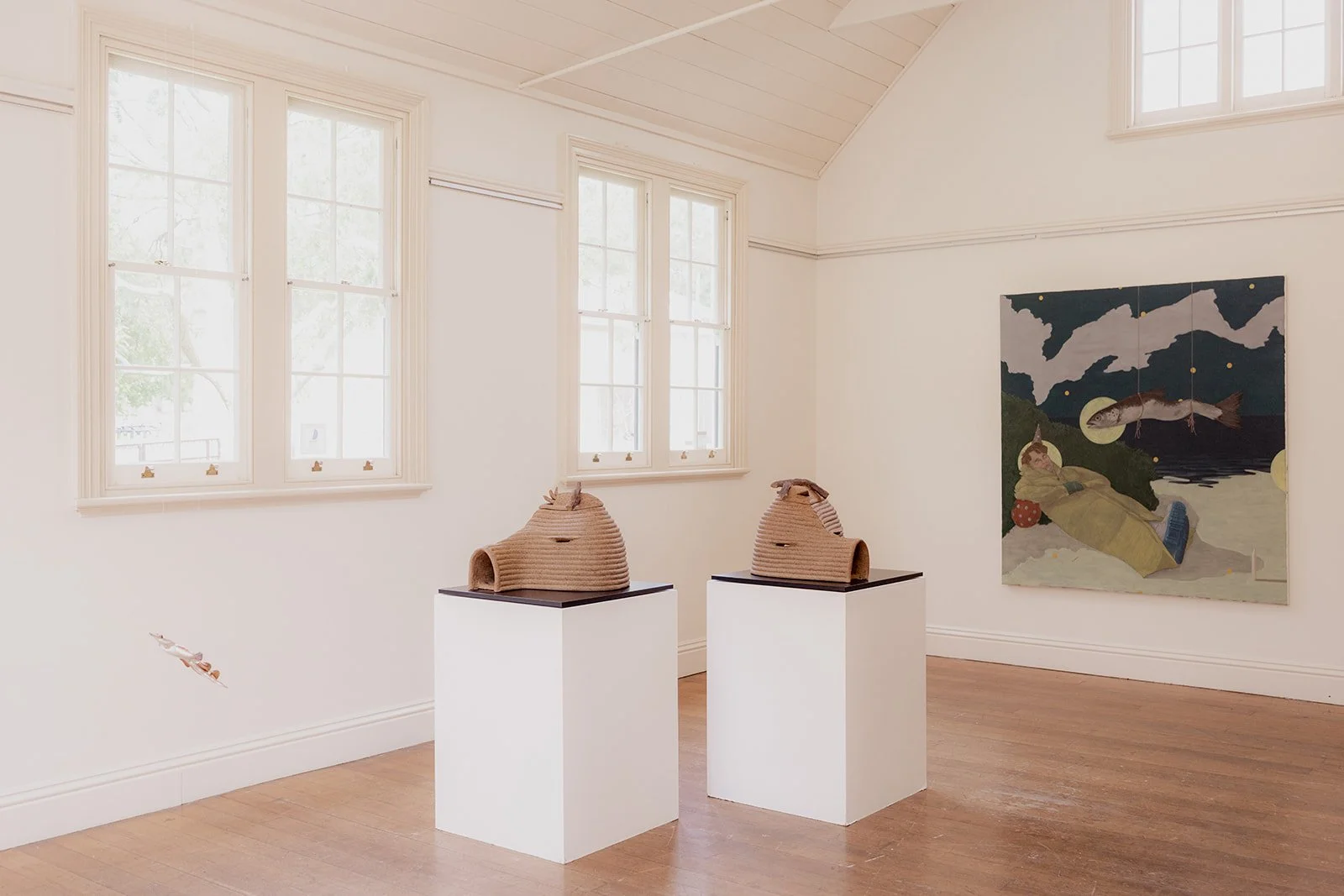
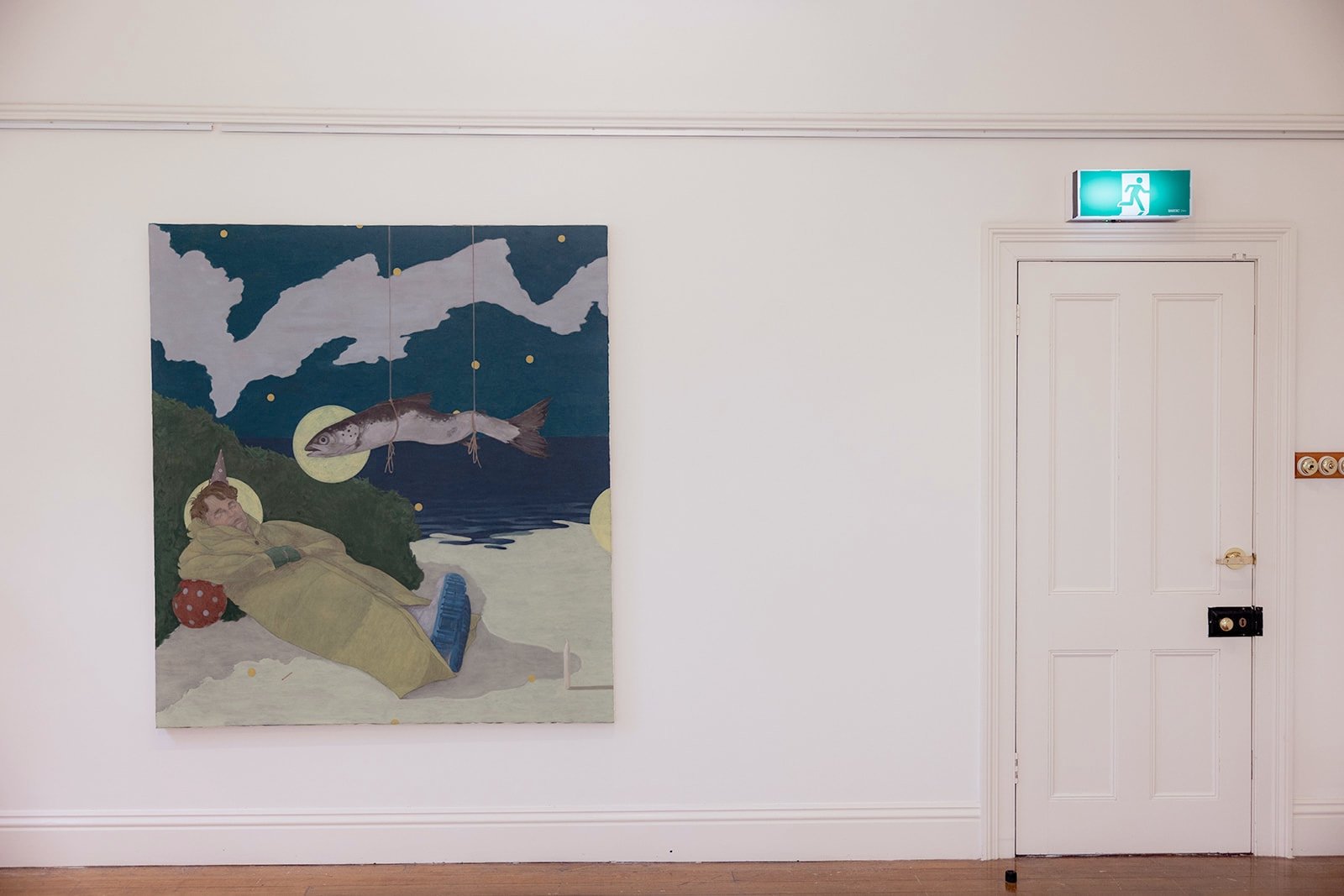
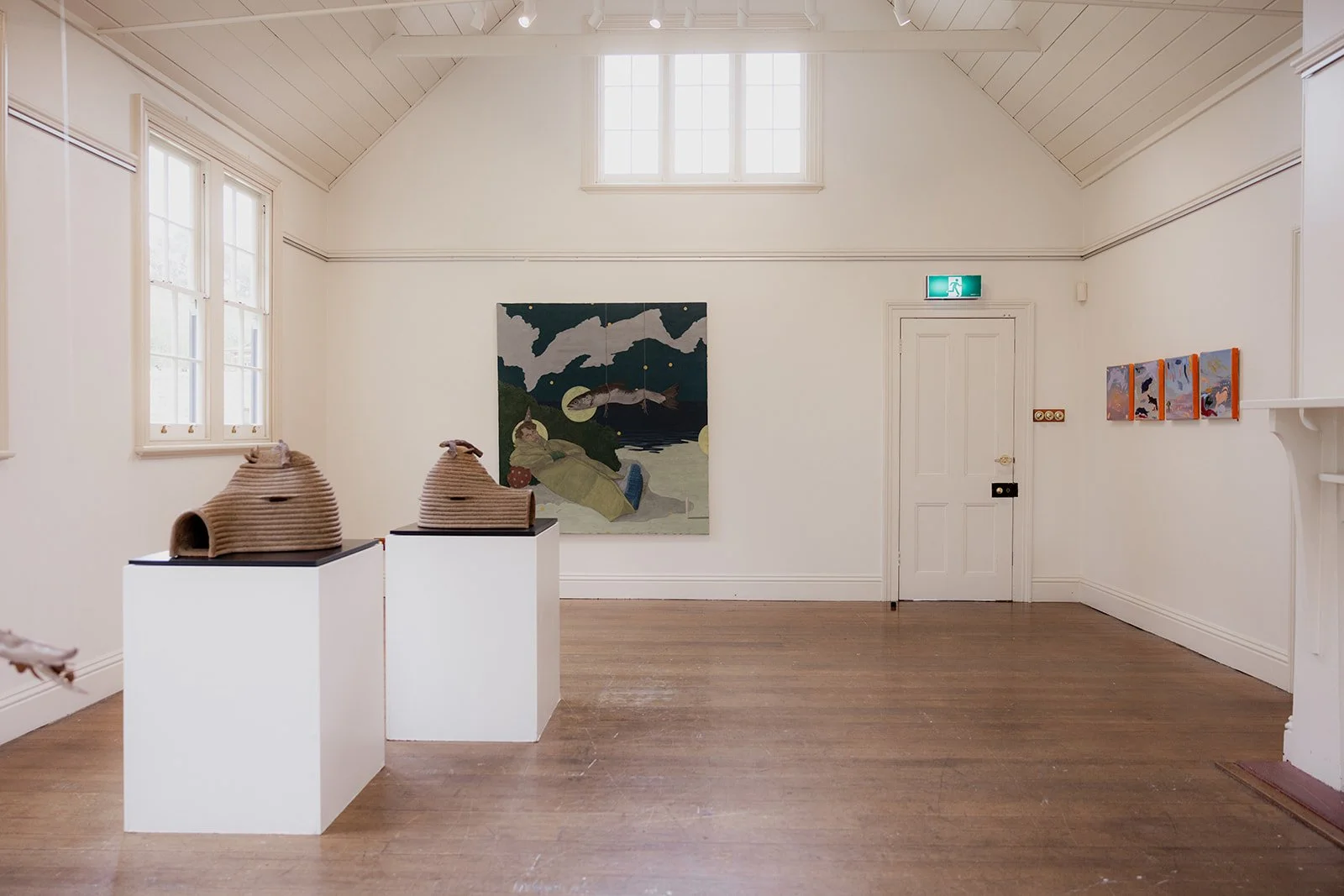
Sea Above, Sky Below
Joshua Andree
Jane Bamford
Vanessa Greeno
Cale Hine
Sue Lovegrove
Liam Ross Baker
Gabbee Stolp
Esther Touber
Lutruwita’s/Tasmania’s waterways and coastlines cradle life, nurturing a rich tapestry of biodiversity, and sustain ecosystems. Yet, the impacts of industry and climate change threaten the delicate balance of these systems. This exhibition brings together artists who explore the intricate relationships between water, land, and life, highlighting the importance of conservation efforts and the need for adaptation in the face of uncertainty. Through their works, we are invited to reflect on the interconnectedness of our world and the vital role that water plays in sustaining it.
Photography by Rosie Hastie
Sea Above, Sky Below – thoughts on the power of the elements and the arts
Written by Professor Elaine Stratford, November 2025
University of Tasmania and Studio Stratford
To think and feel elementally is to think with, rather than about, the world—to feel into it. It means attending to that which sustains life across earth, air, fire, and water. In a disruptive age, thinking with and feeling into both matter, especially as embodied practices inviting both gentle solitude and warm connection. The arts are profound allies that bring elements back into relation with senses and help us reorient to our own pulses and to the rhythms of the world around us.
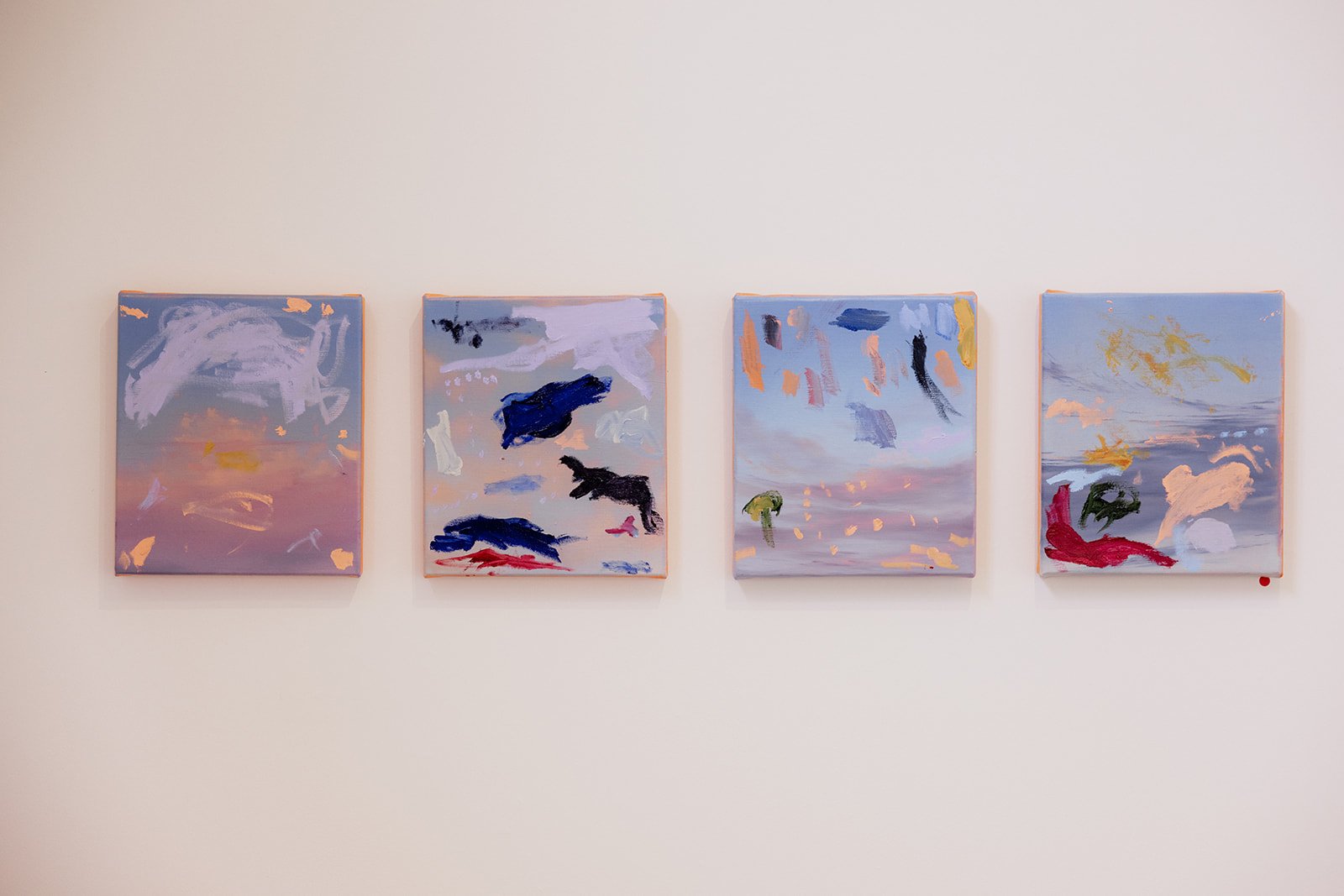
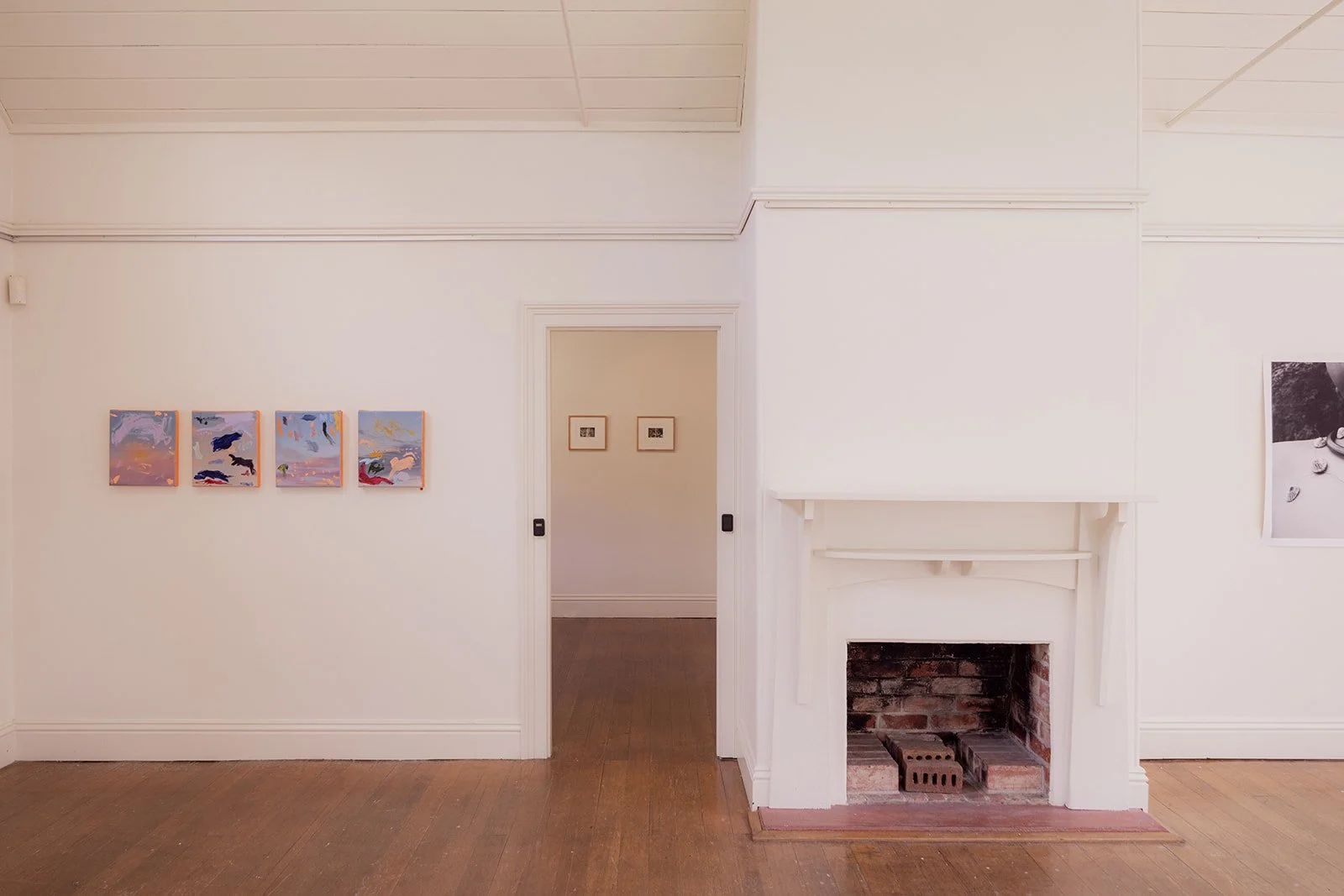
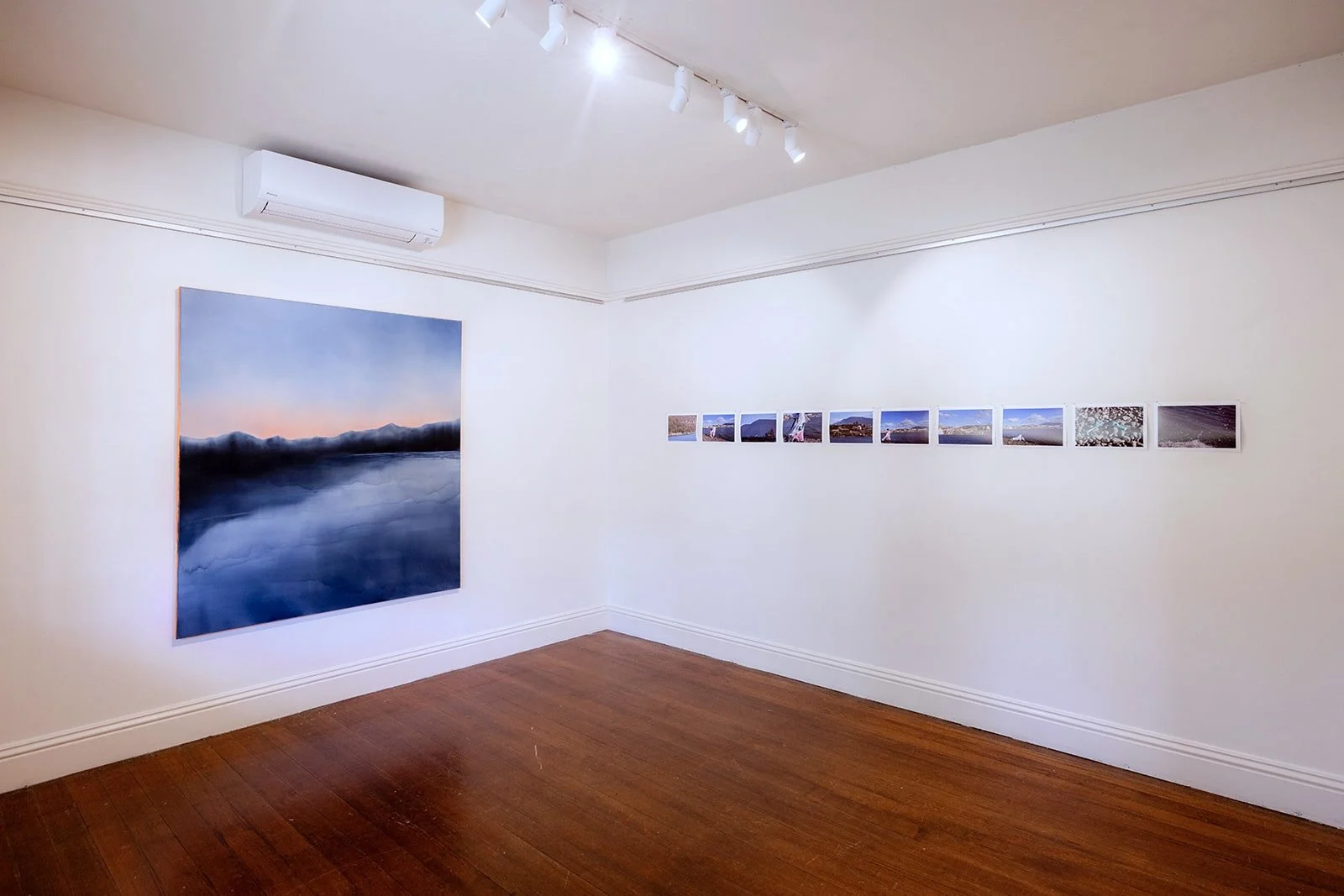
Sea Above, Sky Below powerfully shows how artists in Lutruwita/Tasmania perceive these elemental relations anew and are working to situate care and creativity within the same ecological field. The exhibition turns perception inside out. To imagine the sea above and the sky below is to enter a world where air and water change places, a shift revealing how the elements are entwined. With its suspended horizons and diffused light, Joshua Andree’s painting Lake Overture captures this elemental exchange—the meeting of atmosphere and reflection, weight, and drift. Such inversions are a reminder that perception itself is fluid: what seems fixed is always moving.
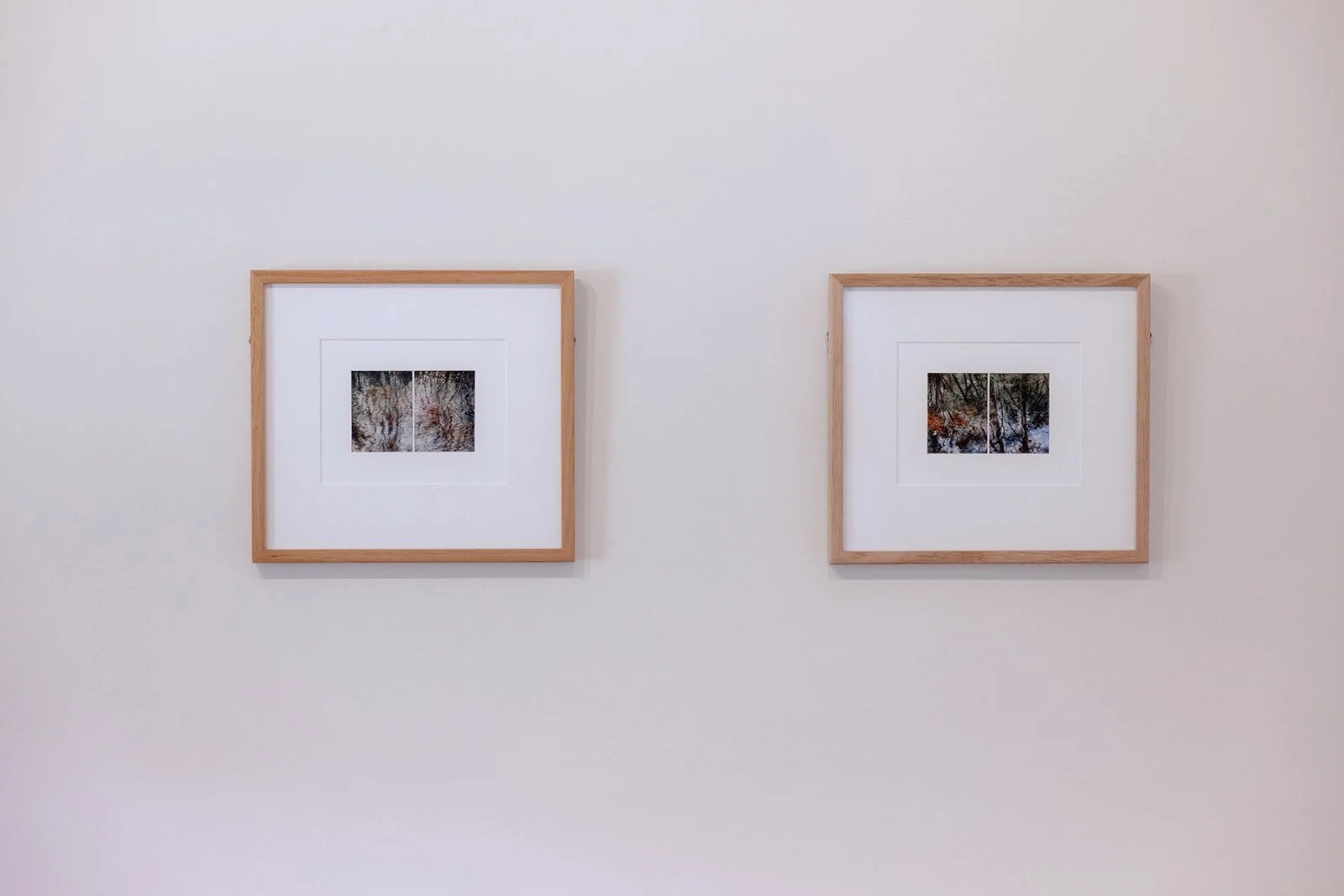
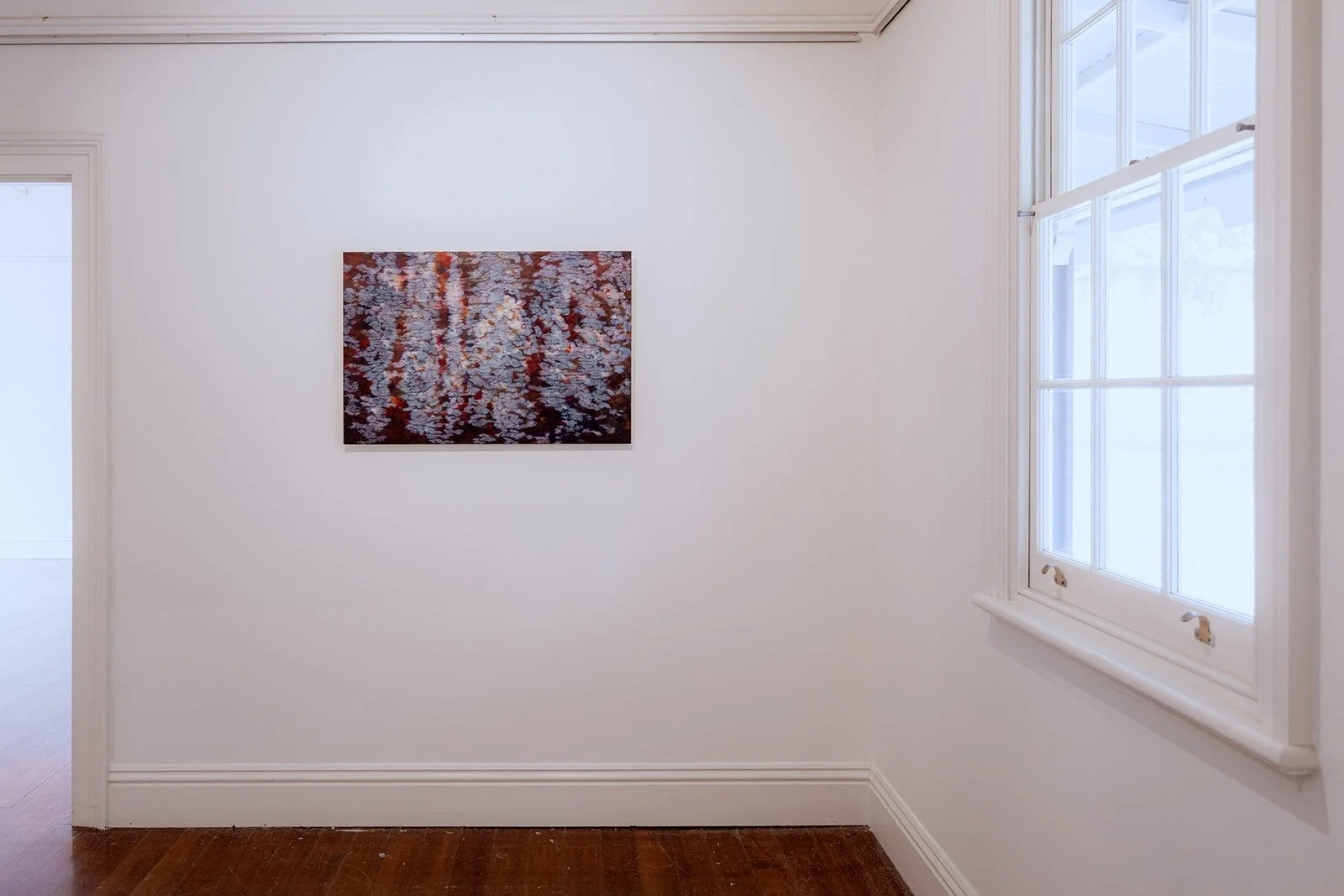
Lutruwita’s waterways are living archives, and hold traces of ancestral care, industrial residue, and ecological resilience. In Sue Lovegrove’s Voice of Water series, ripples and reflections are repositories of memory and feeling. Her intricate brushwork reveals how water records the play of light and wind, as well as the passing of time. These paintings remind us that water keeps what we have forgotten, bearing both our histories and our hopes.
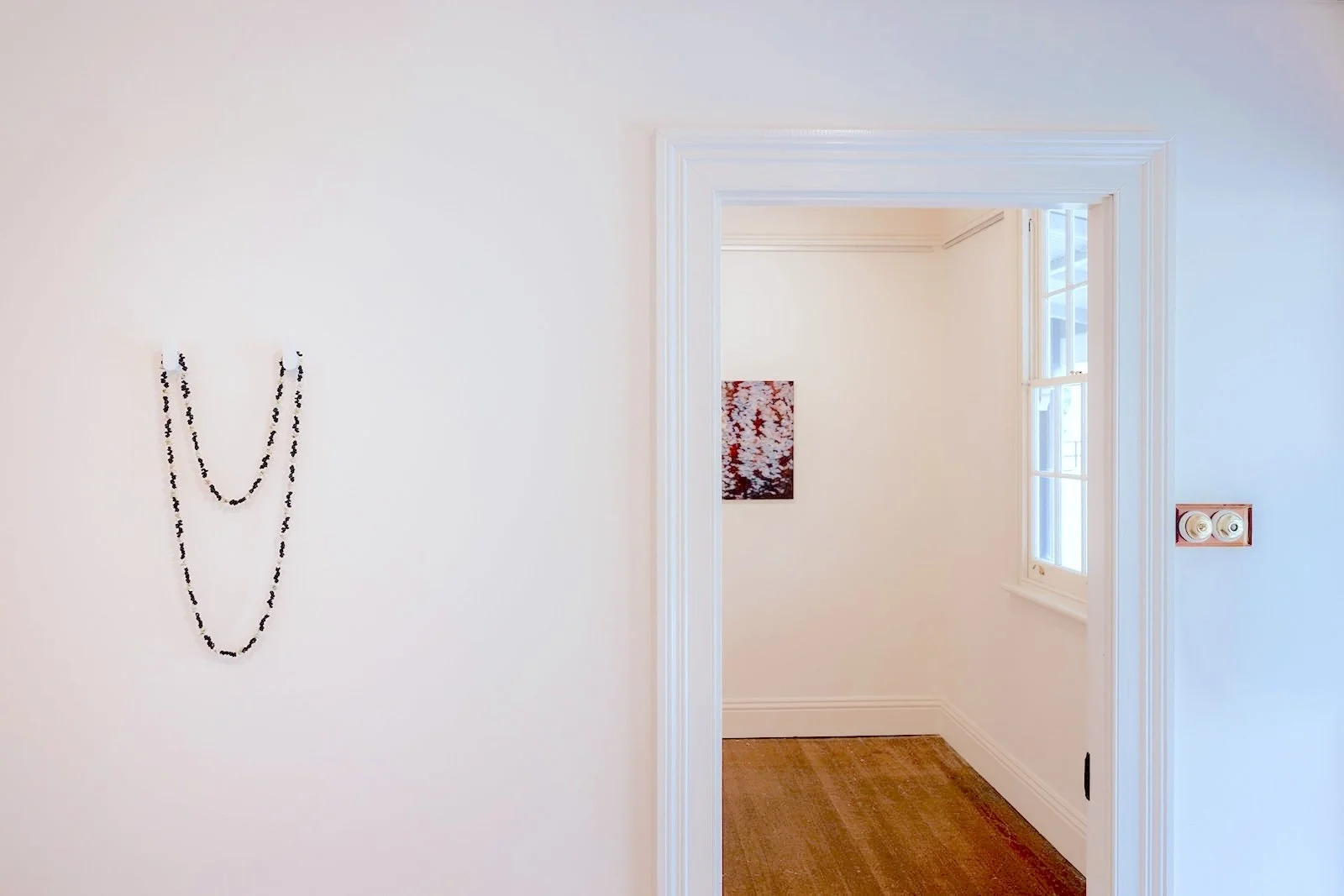
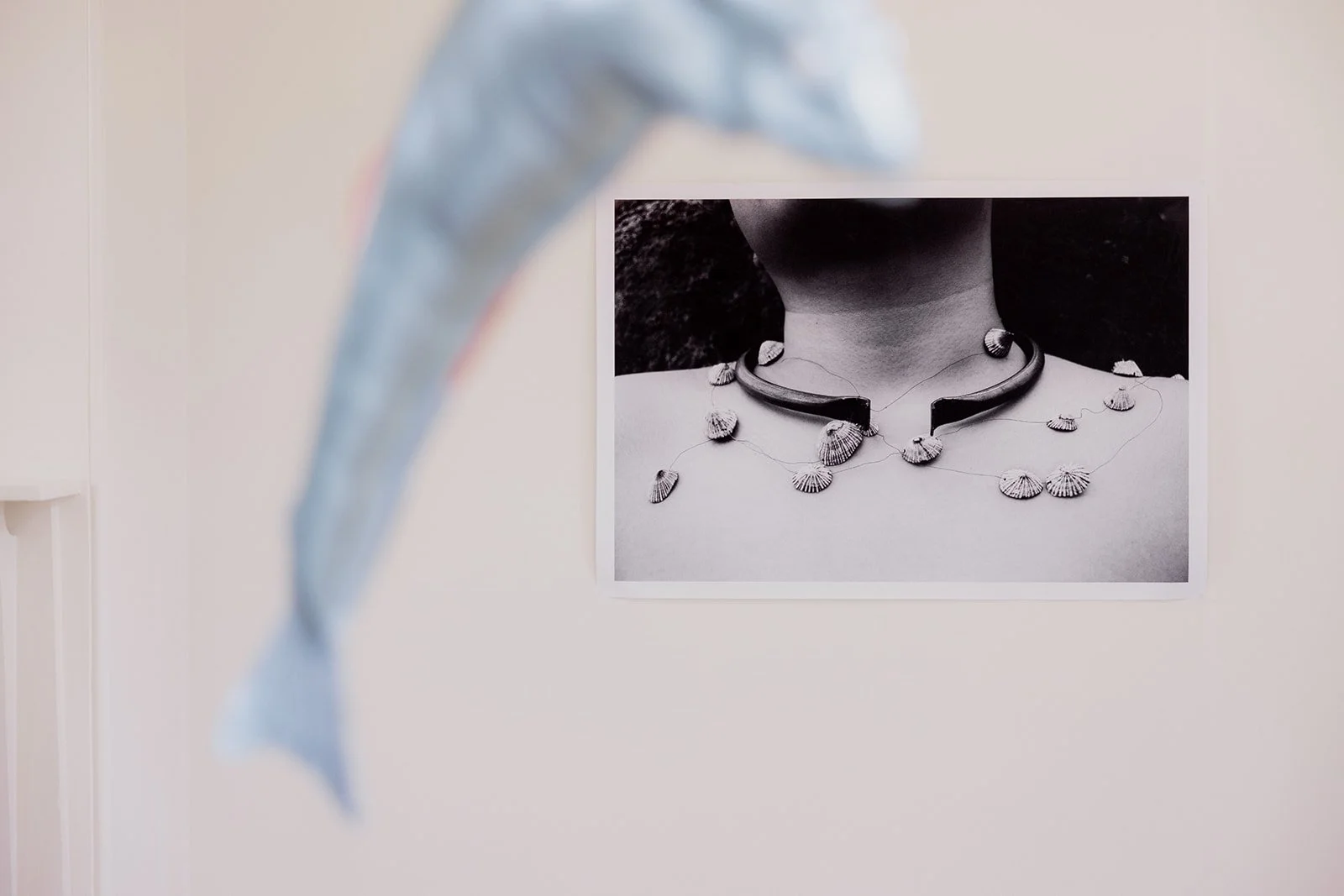
Vanessa Greeno’s Rina Truwana (Woman of Cape Barren Island) extends these conversations among water, culture, and care. Working within a long lineage of Palawa shell-making, Greeno threads black crow, toothie, and green maireener shells to honour her grandmother and mother, both esteemed kanalaritja (shell necklace) makers. Gathered once a year and only in the amounts needed, the shells speak of restraint, continuity, and respect for sea Country. In her hands, this traditional practice becomes a living dialogue between ocean and ancestry, showing how art can sustain both ecology and memory.
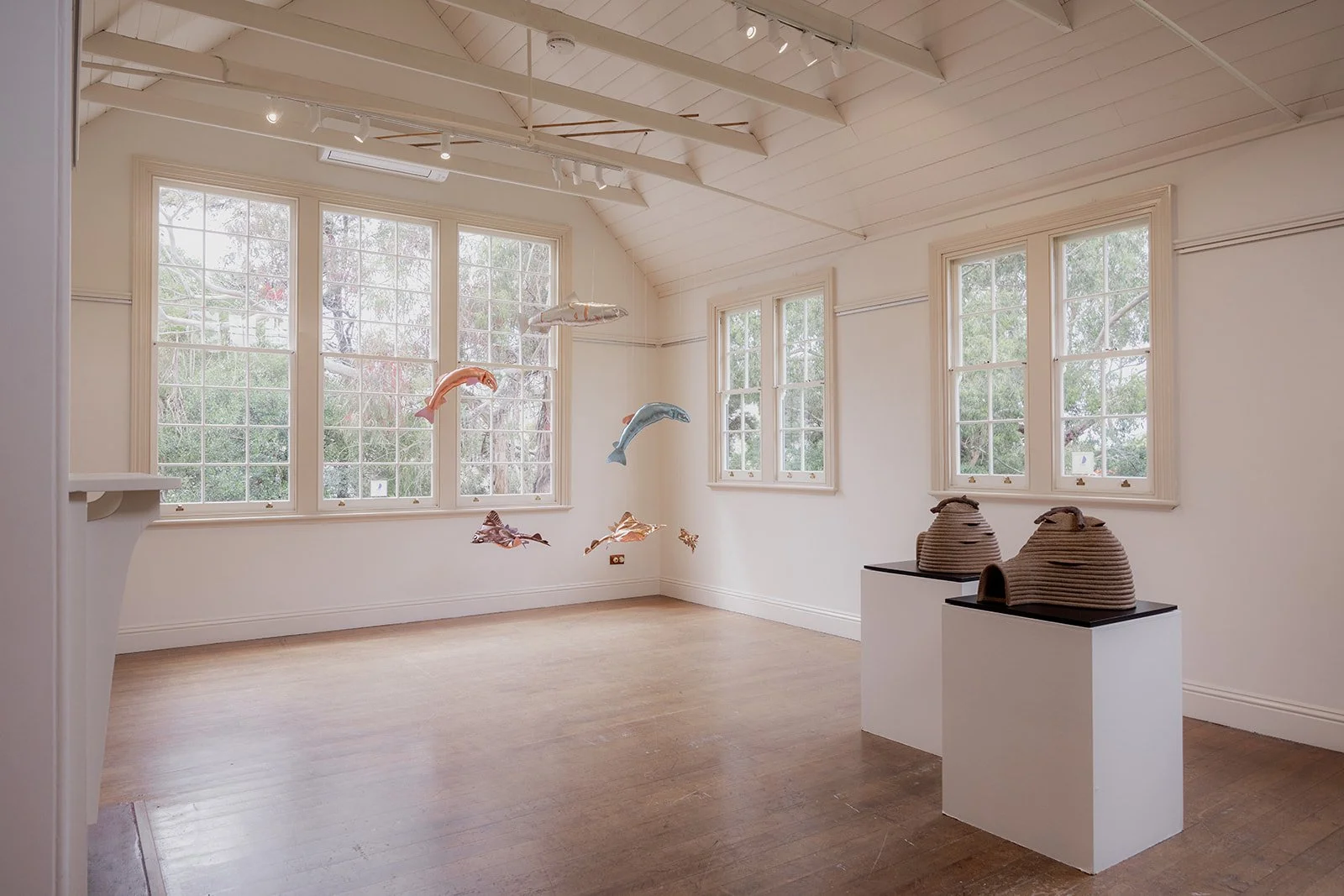
Each artist in this moving exhibition builds or restores forms of care. Jane Bamford’s ceramic nesting modules for little penguins were developed with ecologists and engineers and articulate compassion in clay: they shelter, regulate, and protect. In her hands, art is a literal infrastructure for the more-than-human. Across the gallery, such works point to how imagination is a practical tool for renewal and to how art can help mend what has been damaged.
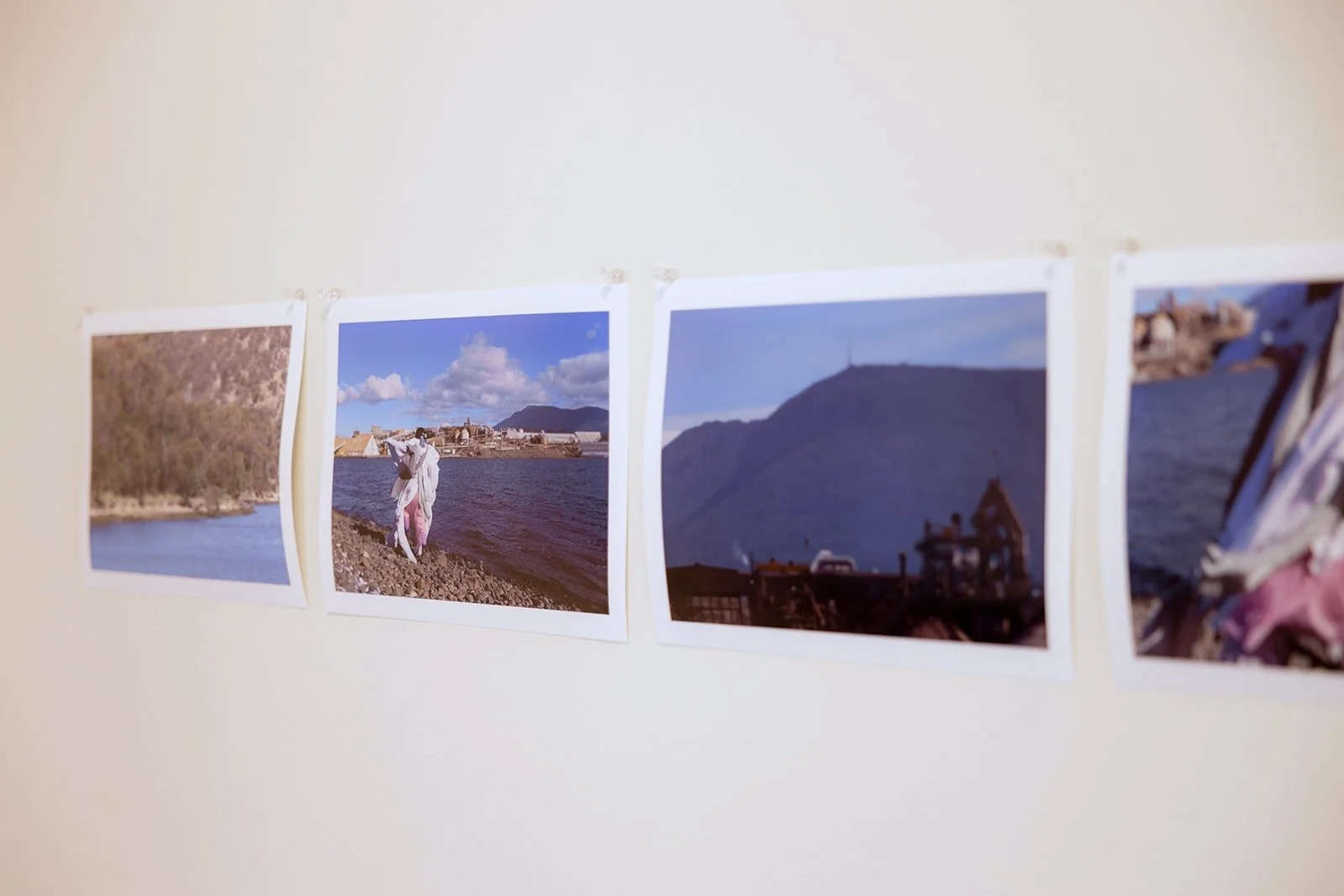
As a whole, the exhibition seems to dwell in the in-between: where land meets sea, industry meets ecology, and matter meets spirit. Cale Hine’s performance stills set against the zinc works and Liam Ross Baker’s Waking Dream both explore these thresholds—the tension between labour and rest, steel and water, body and landscape. And both are reminders that existence is liminal, always shaped by flows and frictions.
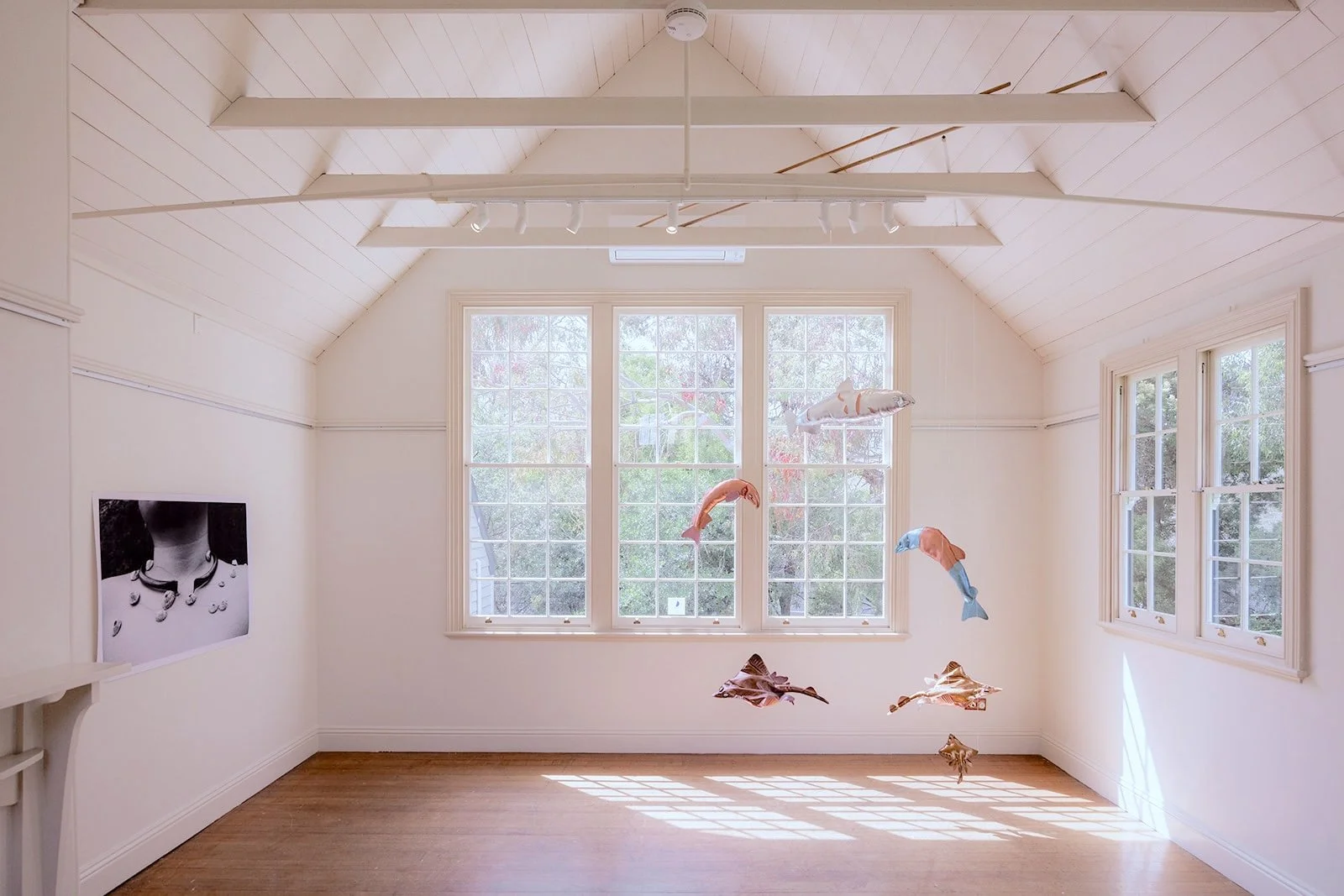
The Derwent—Timtumili Minanya—threads through several works in the exhibition. It is both life source and scar. In responding to the latter, Gabbee Stolp’s Maugean Skate (Golden Child) confronts the cost of extraction—the deaths of species flanking economic gain. Her stitched leather forms mourn and indict in equal measure and they seem to insist that elemental justice needs to address uneven burdens of colonialism, consumption, and ecological neglect in this island place.
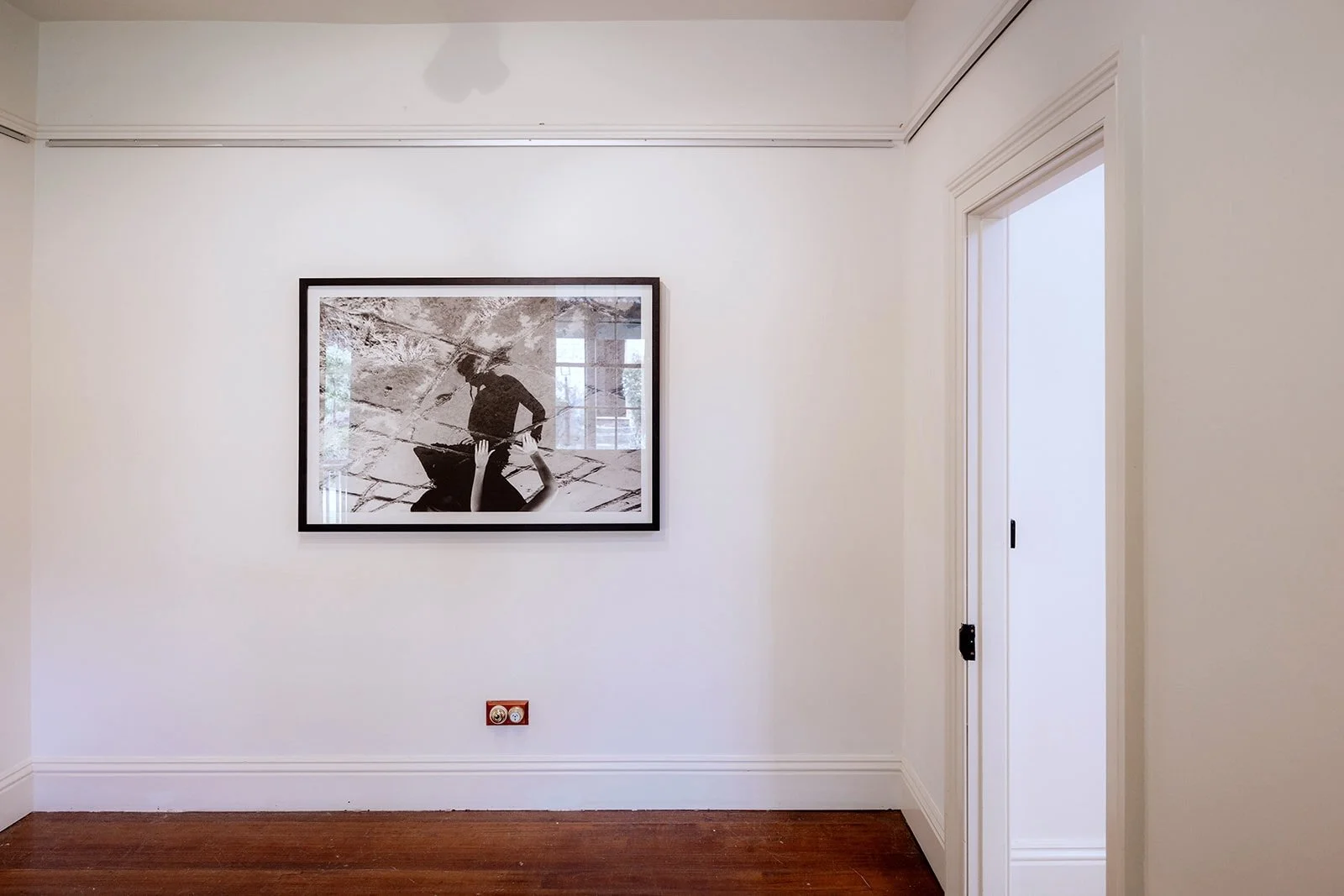
Finally, Sea Above, Sky Below is about water’s gift of renewal. In Esther Touber’s photographic works,Becoming-Aqueous, sea-collected artefacts are reimagined as adornments for the human body—bridging marine and terrestrial life, art and activism. Such gestures invite us to attune: live with the elements. To dwell in this exhibition is to accept movement and change as conditions of care, and to glimpse the beauty of a world held in circulation.
Ultimately, then, what emerges from Sea Above, Sky Below is a sense of deep composure—a grounded sense of hope. Thinking and feeling elementally asks that we keep learning from the elemental world of which we ourselves are parts. In these labours, the arts are indispensable. The future they suggest is neither fixed nor lost—it is lived, one careful act of noticing at a time.