Edges of Existence
Co-curated by Amber Koroluk-Stephenson + Sharifah Emalia Al-Gadrie
Contemporary Art Tasmania, Nipaluna/Hobart
01 August - 12 September 2026
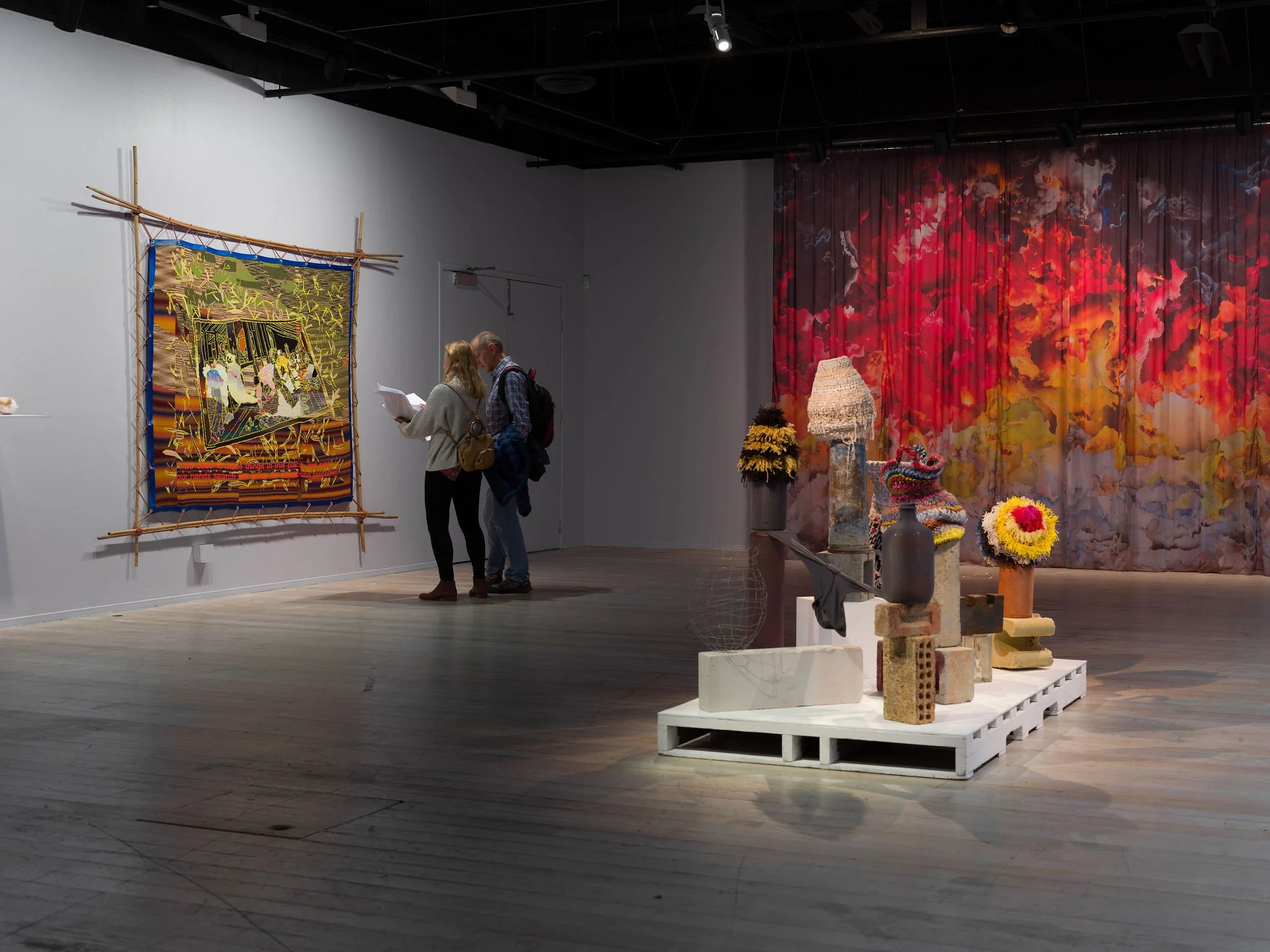
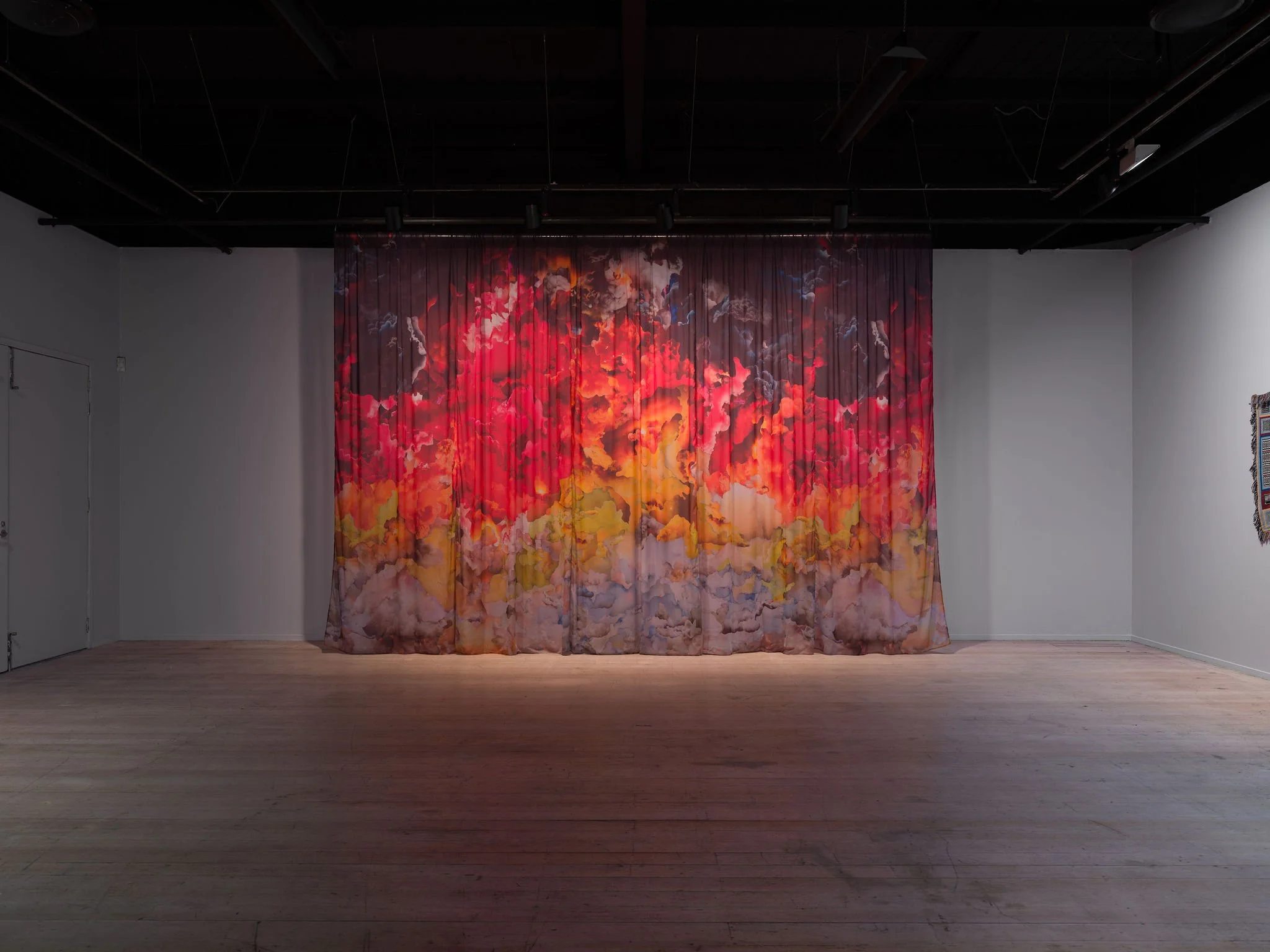
Jemima Wyman, Haze 1…, 2020, hand-cut photo collage printed on chiffon. Courtesy of the artist and Sullivan + Strumpf
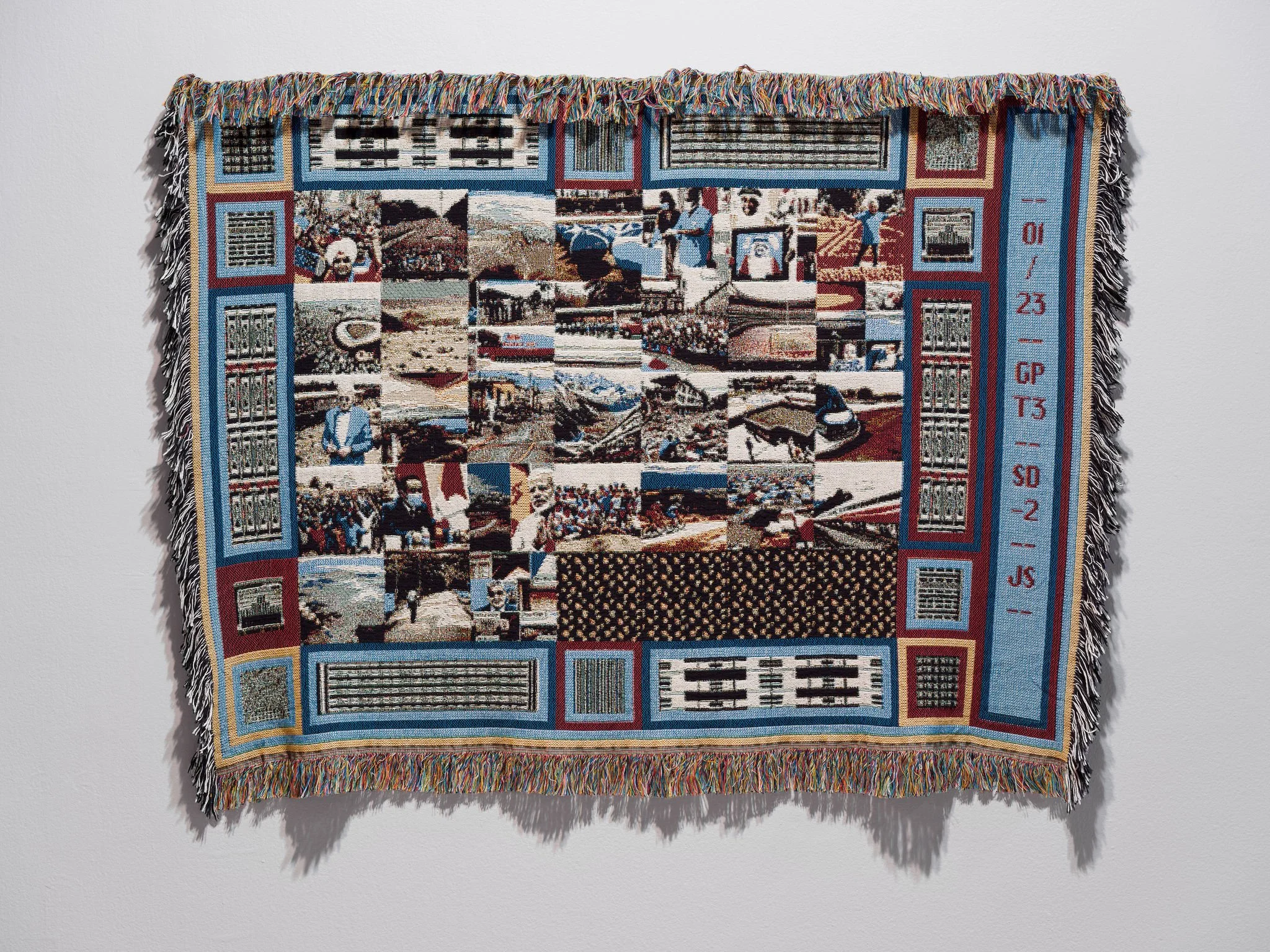
Jonny Scholes, 1/23 from the Interpreted series, 2023, cotton woven tapestry with aluminium hanging rod. Courtesy of the artist and Despard Gallery
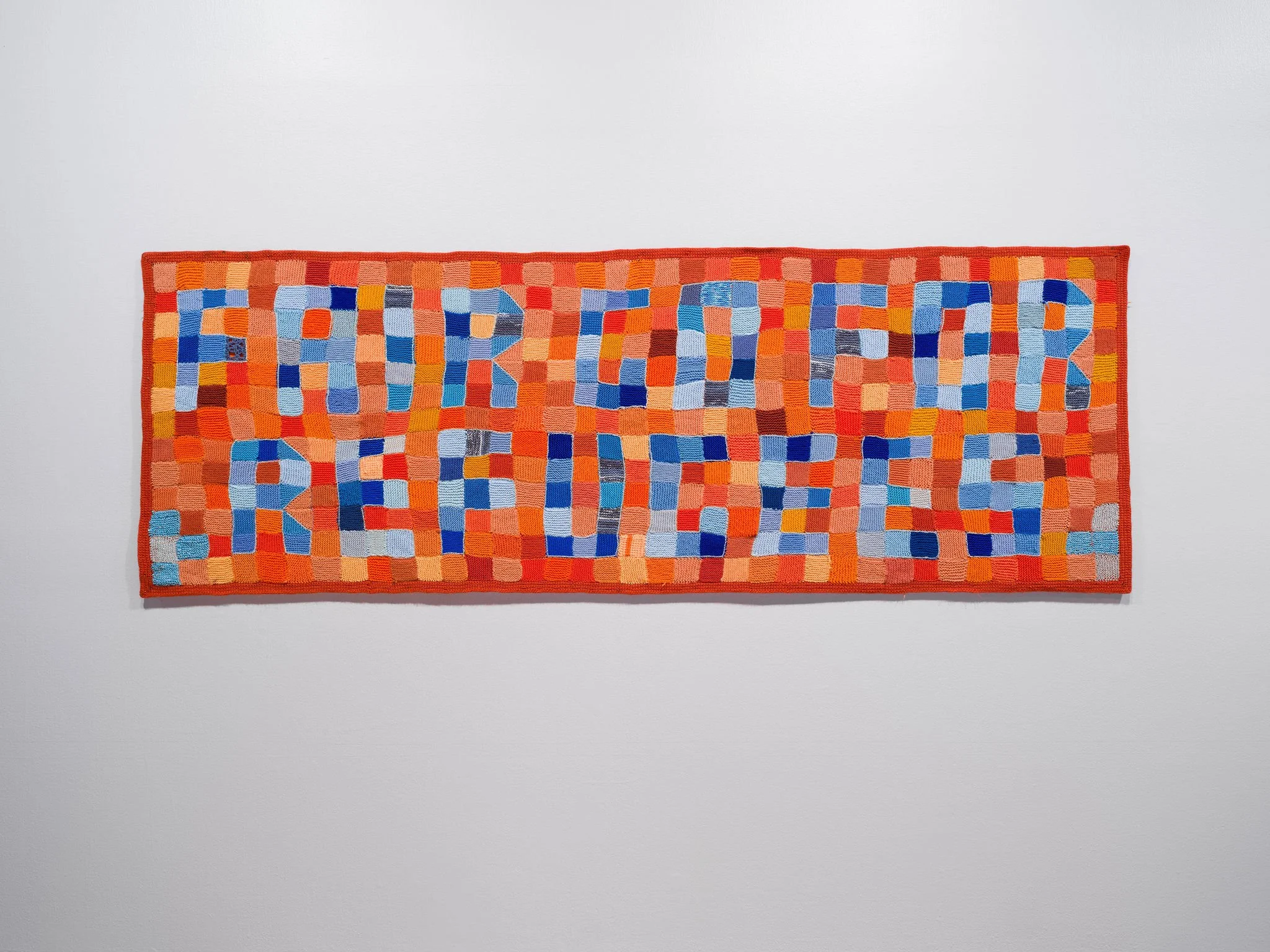
Tassie Nannas, Fair Go For Refugees, 2016, acrylic, wool, 205 × 60 cm. Courtesy of the artists
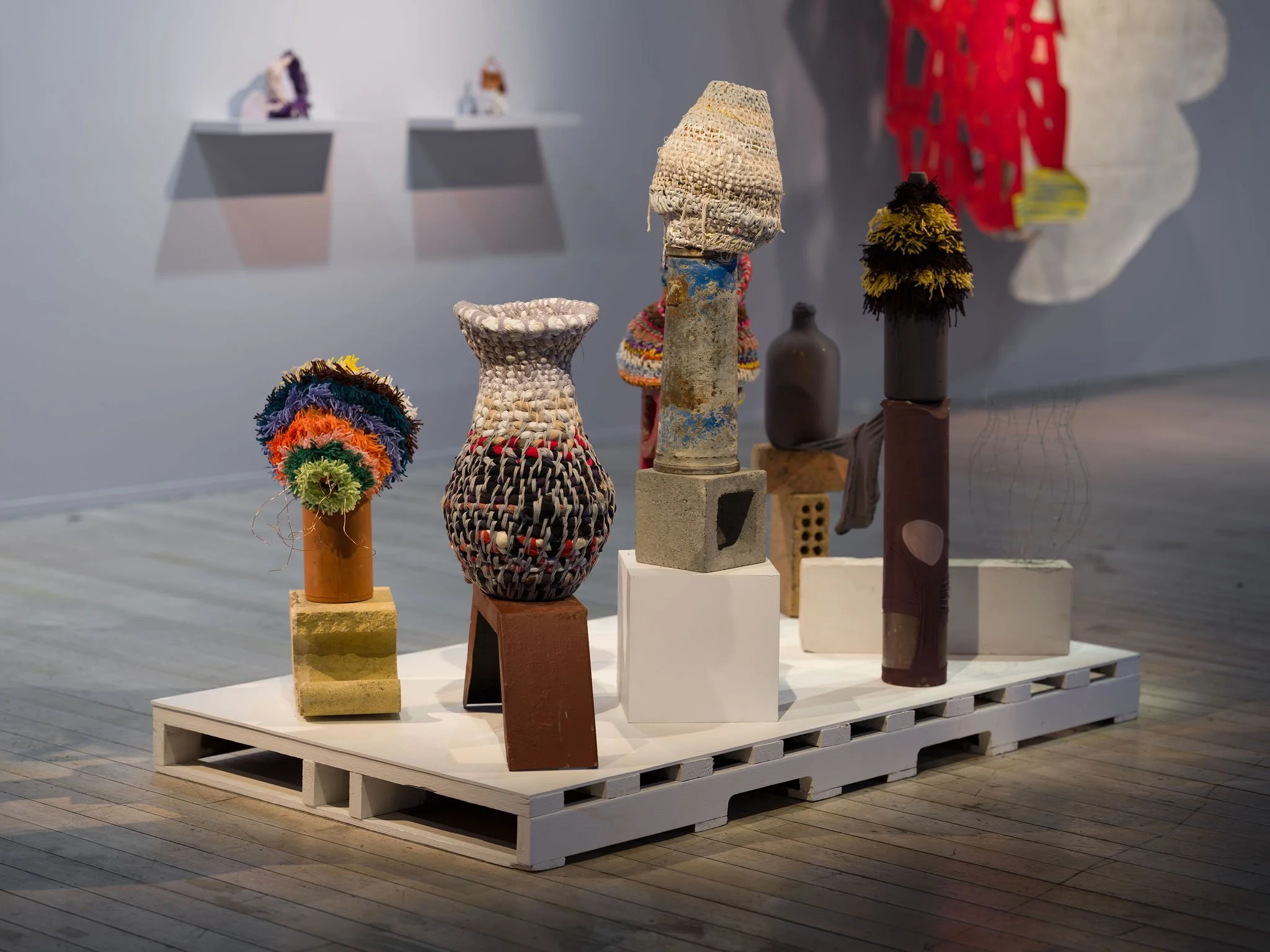
Bonni Que, Potential for Practical Function, 2025, mixed medium, dimensions variable. Courtesy of the artist
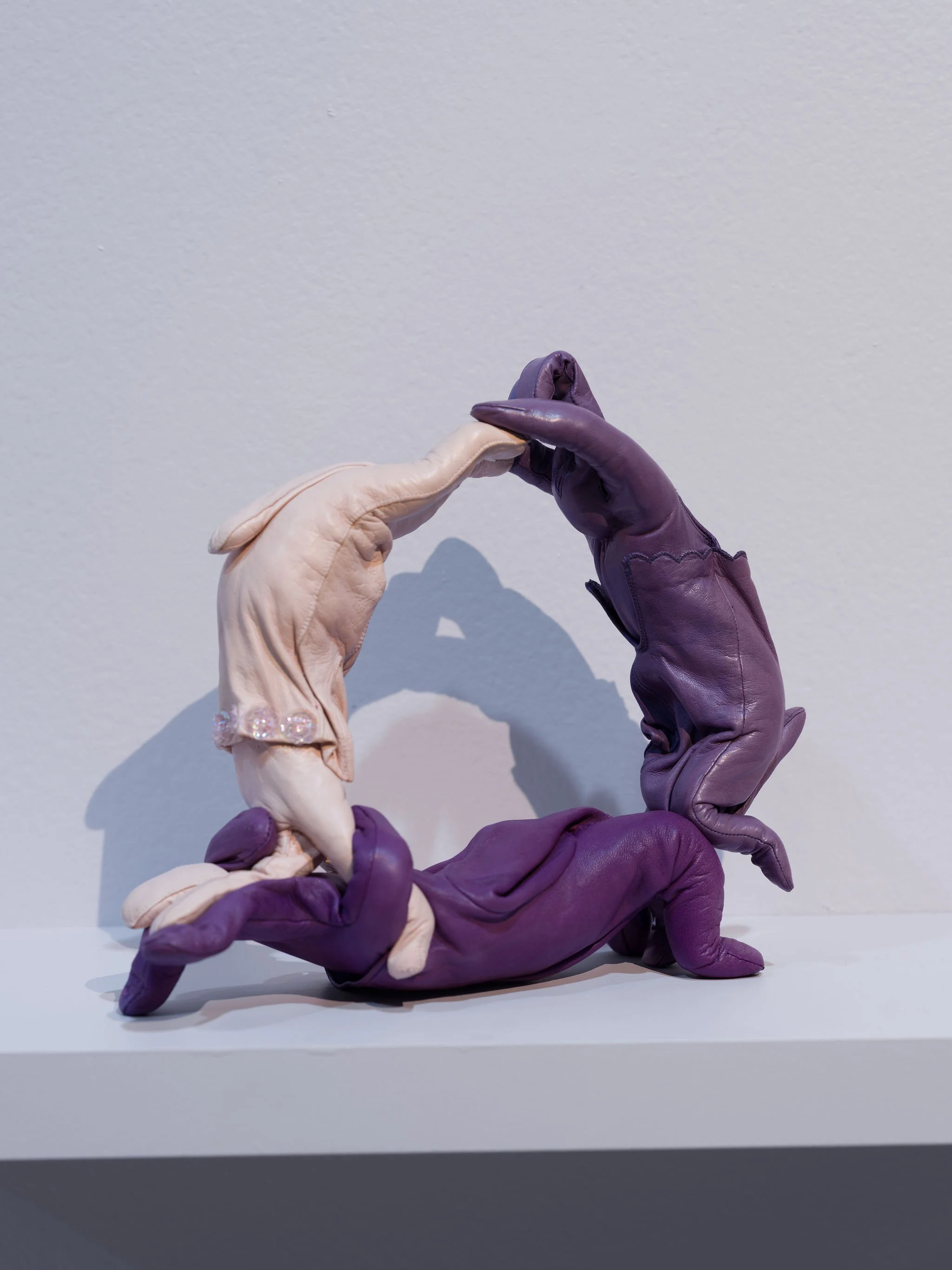
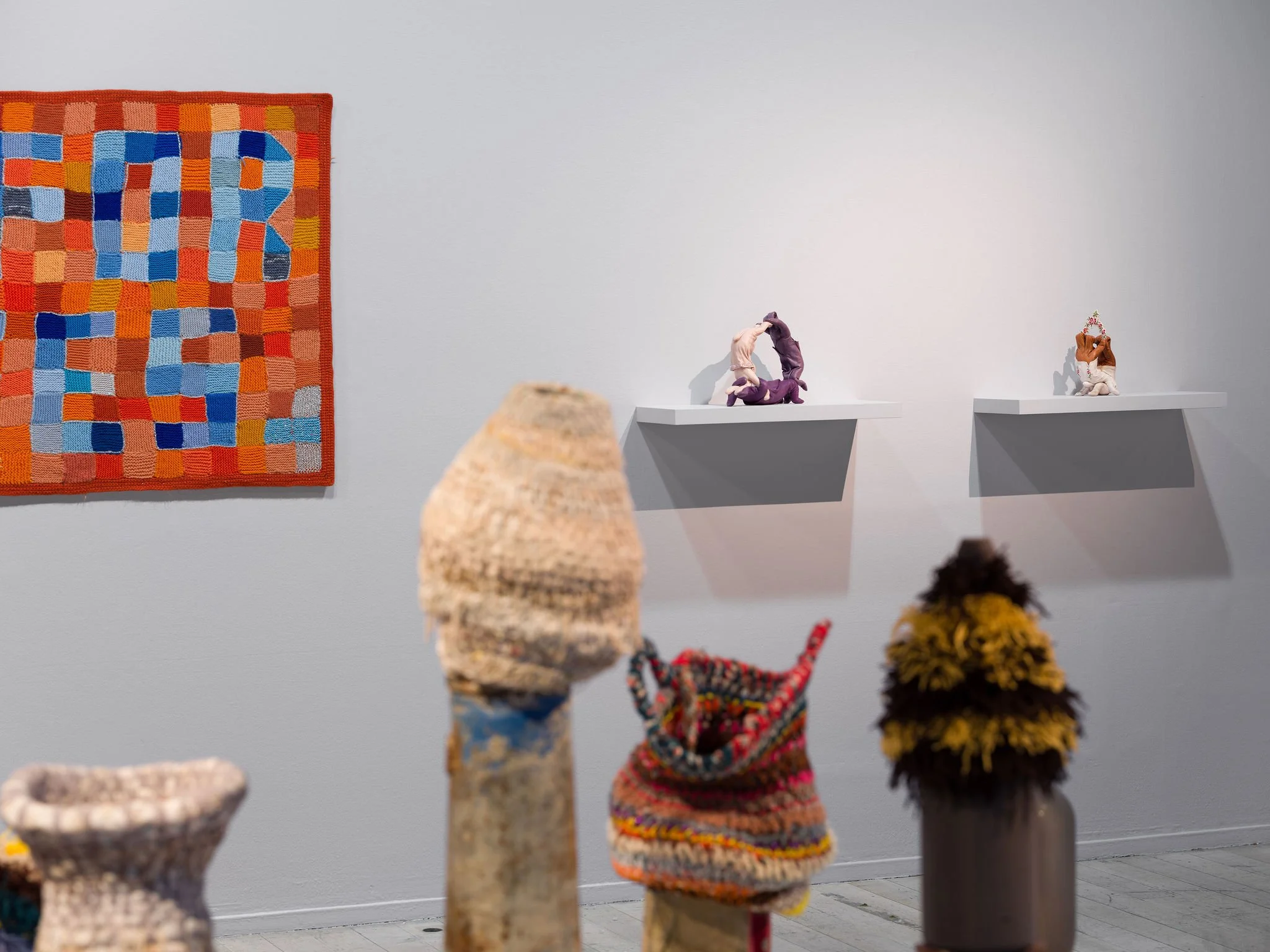
Hannah Gartside, #51 (loopers) from Bunnies in Love, Lust and Longing series, 2025, found leather gloves, mixed media, 22 x 25 x 8 cm. Courtesy of the artist and Tolarno Gallery
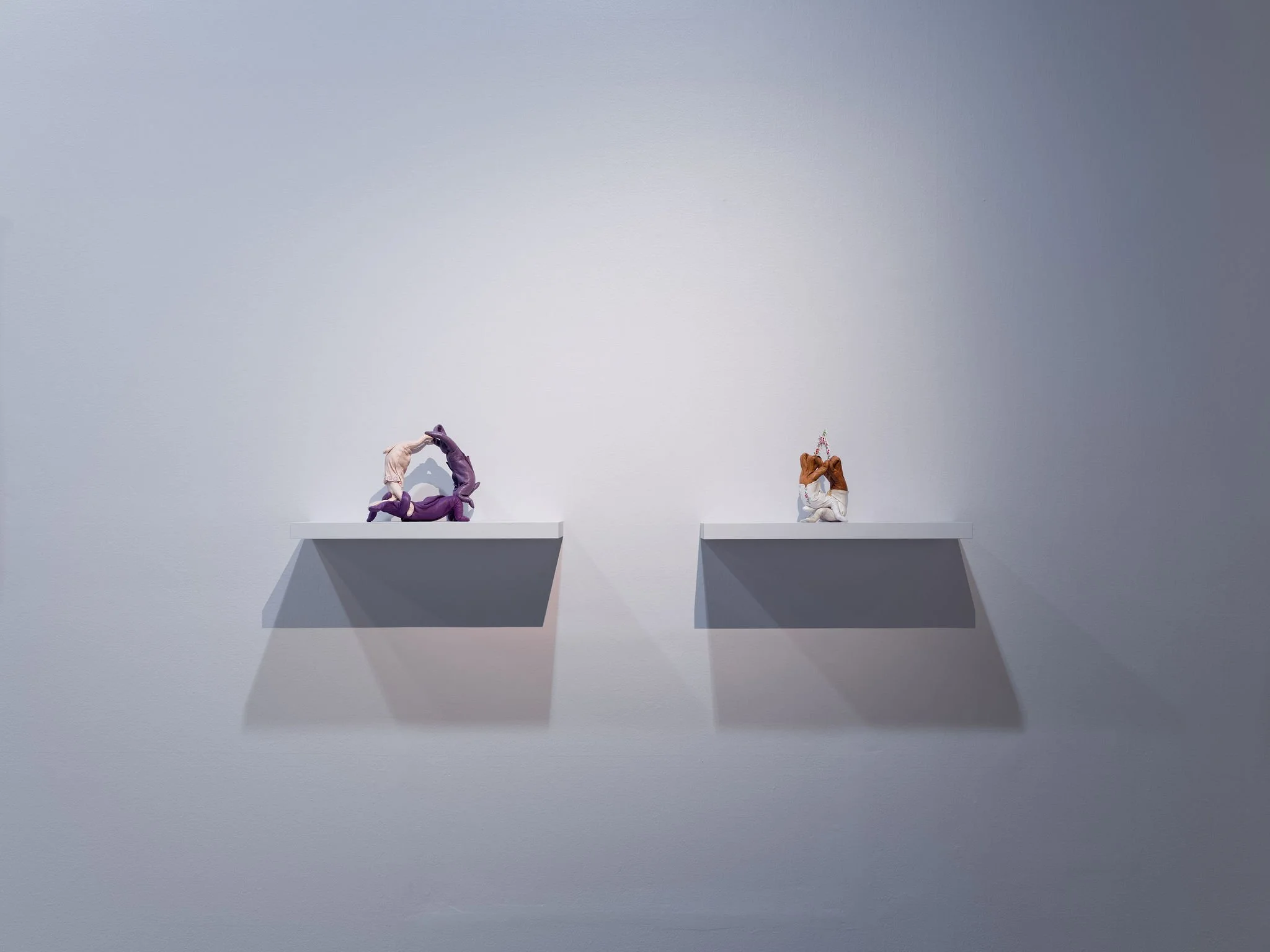
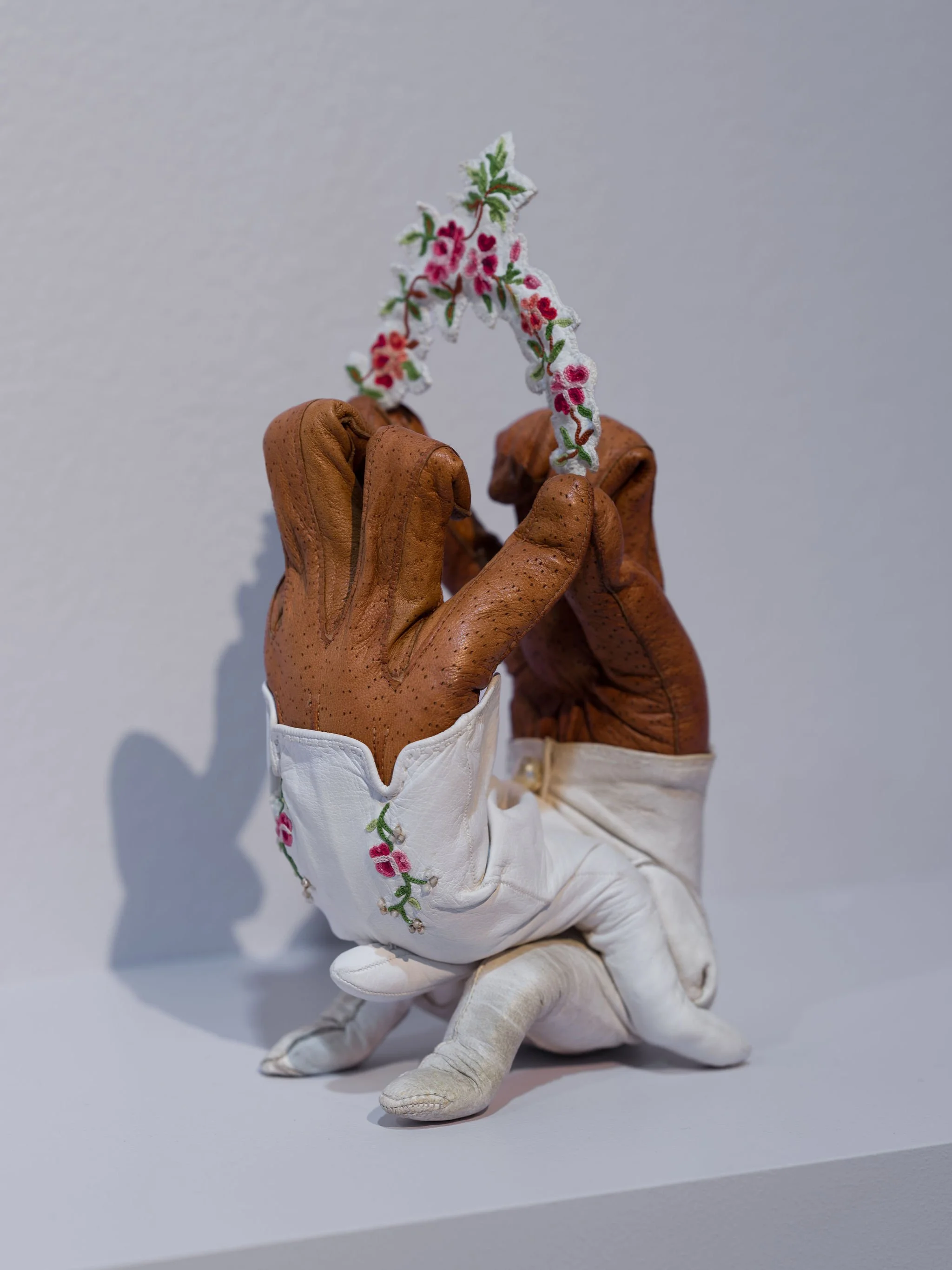
Hannah Gartside, #65 (flower holders) from Bunnies in Love, Lust and Longing series, 2025, found leather gloves, mixed media, 22 x 25 x 8 cm. Courtesy of the artist and Tolarno Gallery
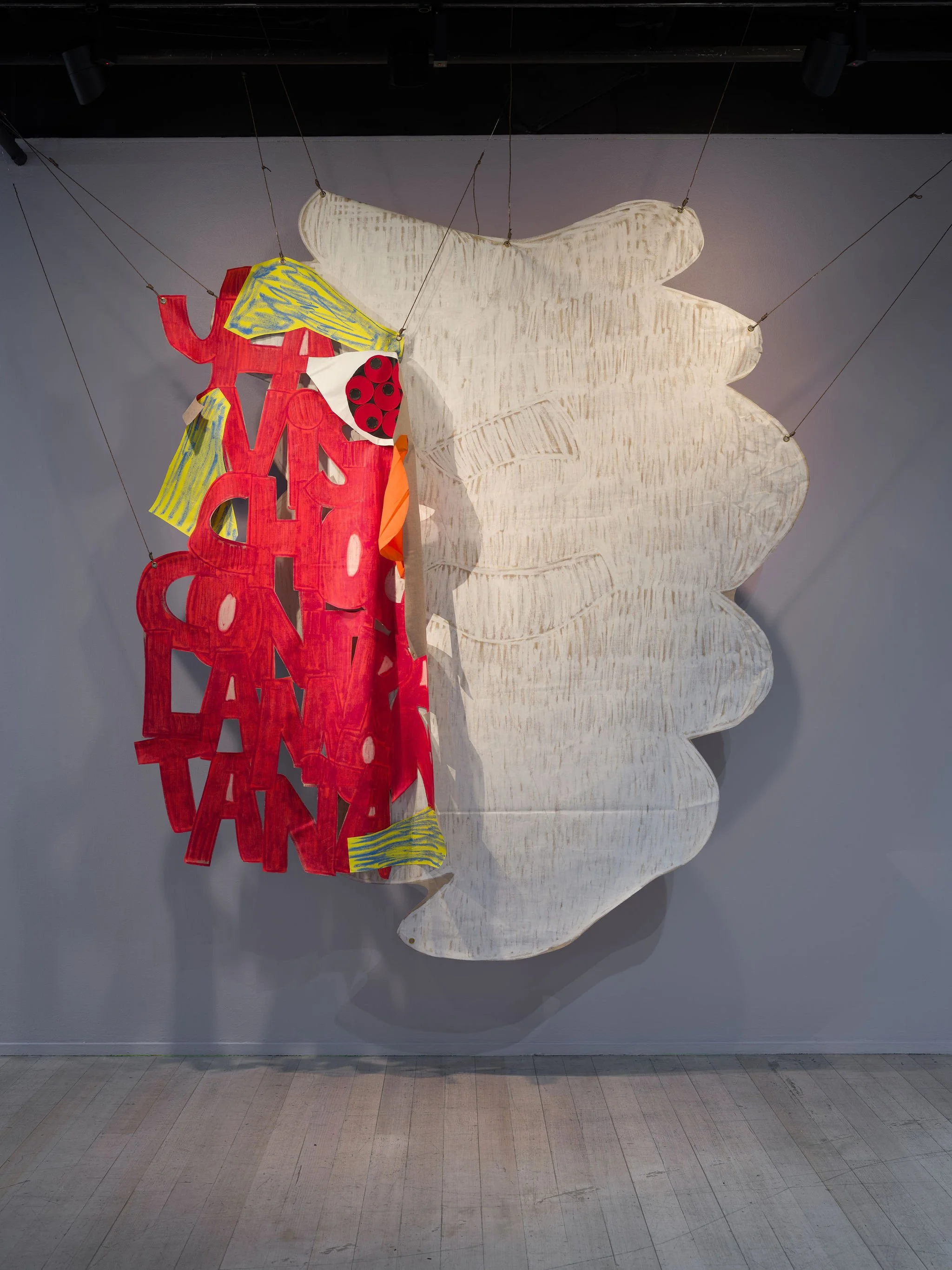
Nadia Hernández, Y la vista choca contra la montaña / And sight collides with the mountain, 2020, oil, acrylic, flashe, linen, wool, cotton, ribbon, grommets, rope and archival material. Courtesy of the artist and Station Gallery
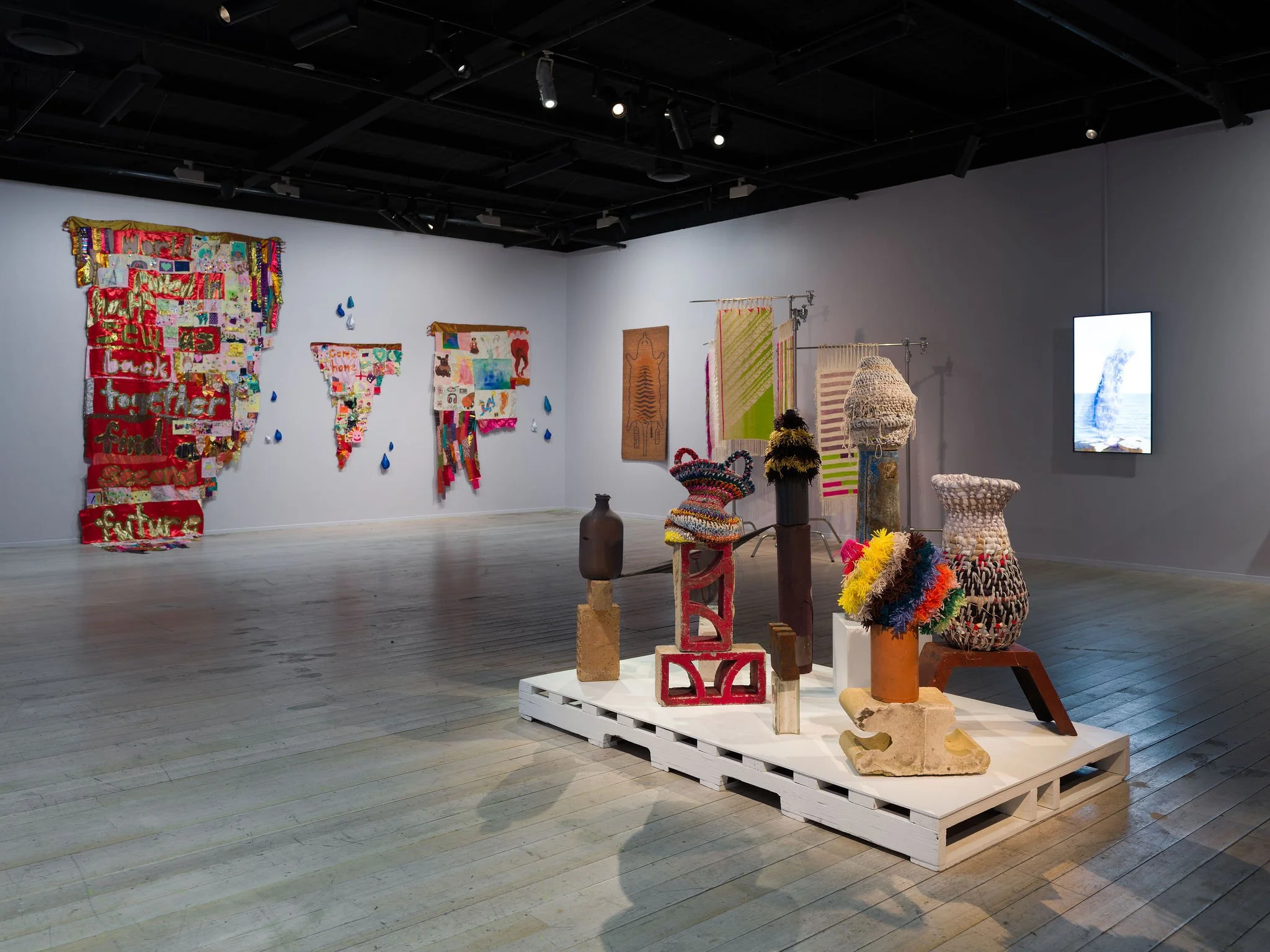
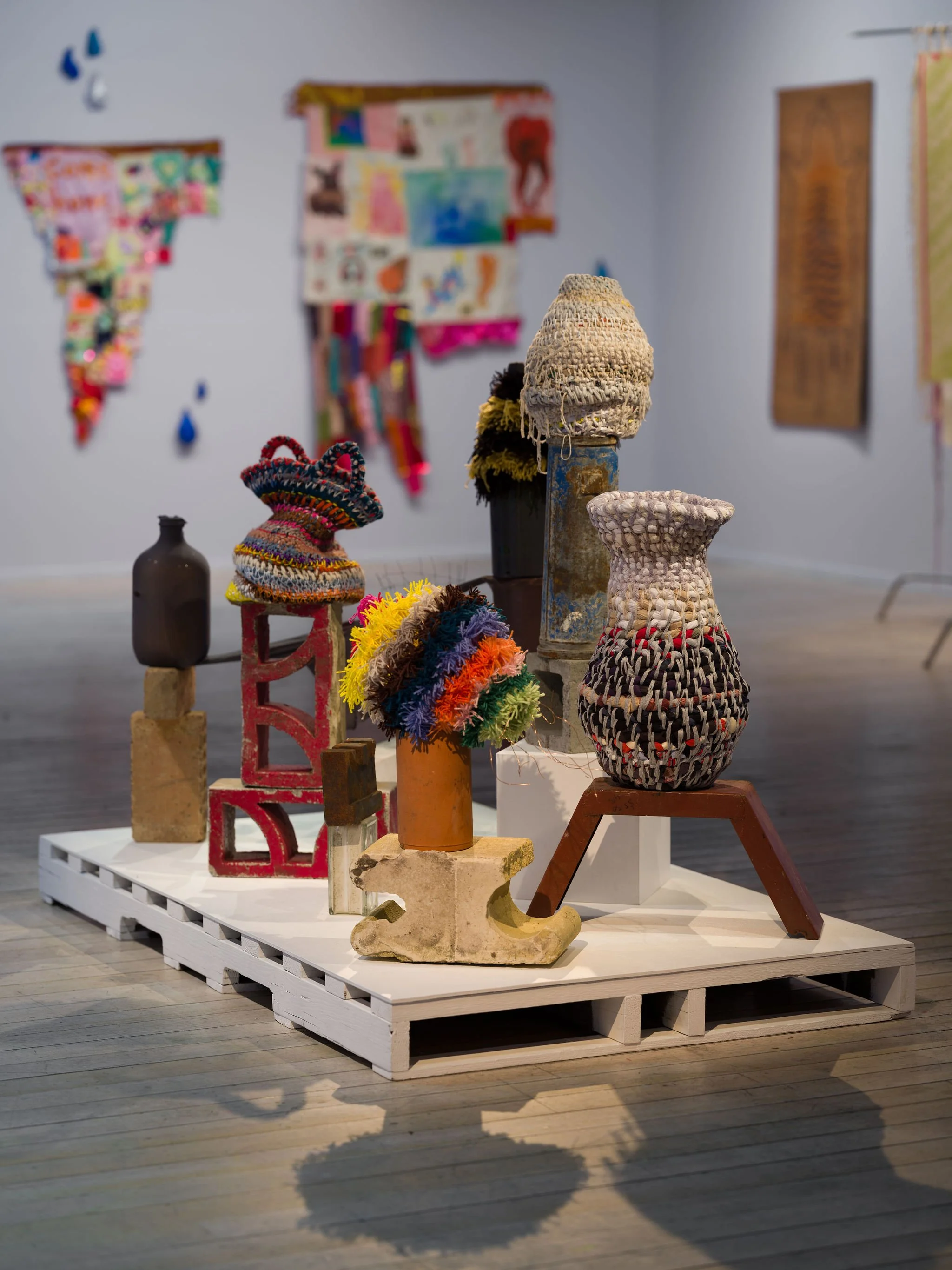
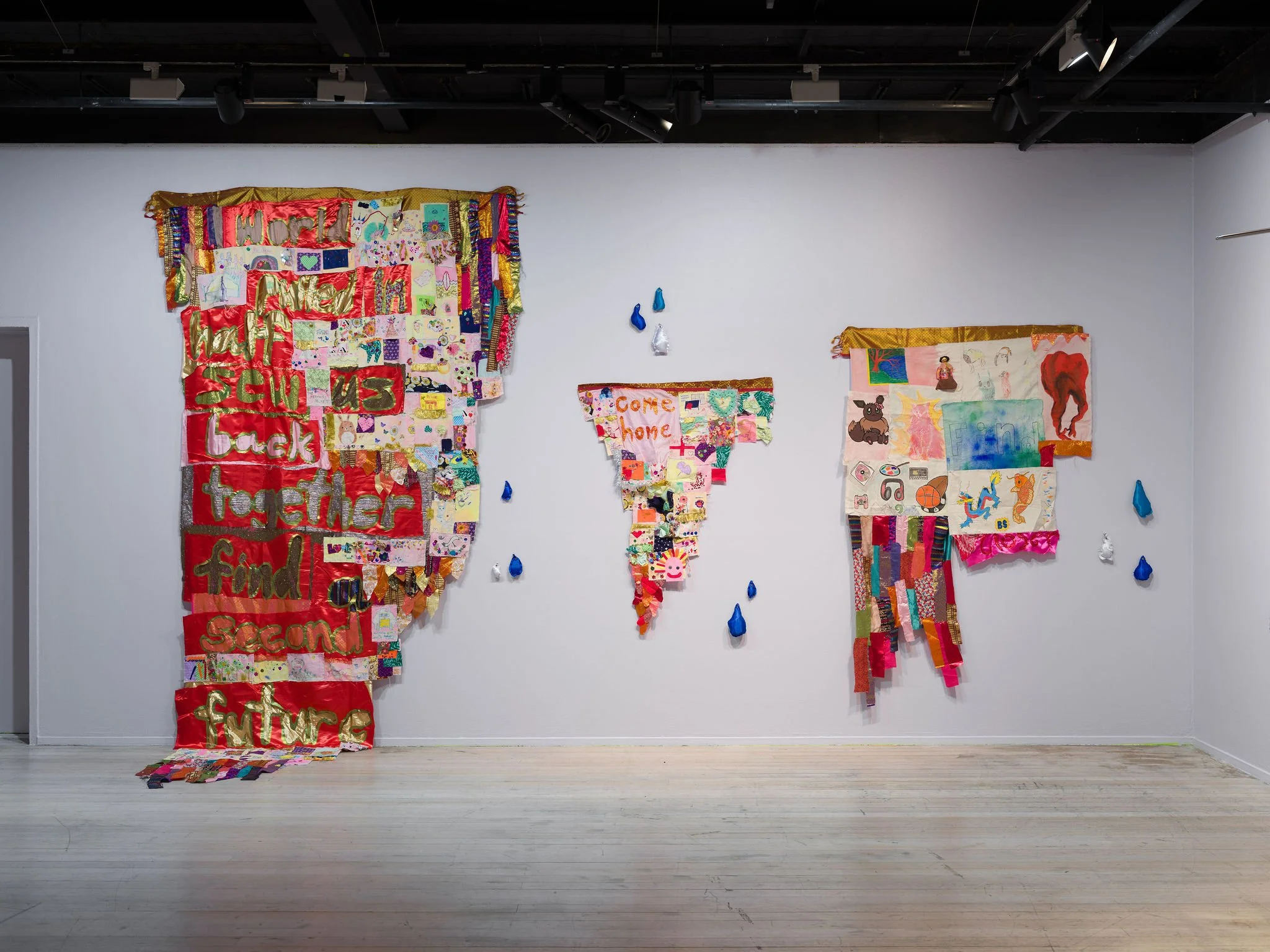
Emma Rani Hodges, Finding Home, Community Project, 2024, mixed media, dimensions variable. Courtesy of the artist
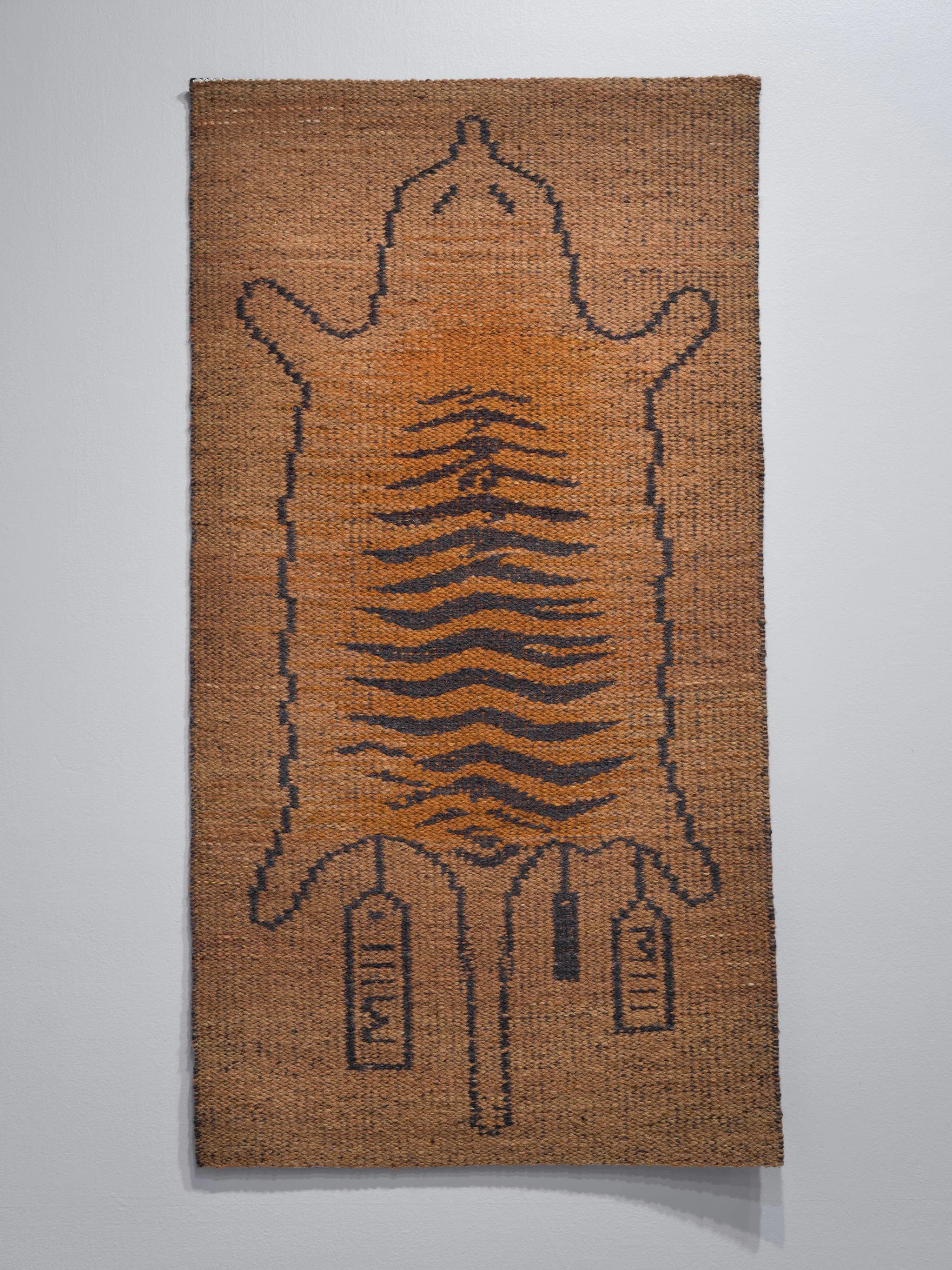
Beth Hatton, Tasmanian Tiger (Thylacinus Cynocephalus), #2 Endangered Species Series, 1994, woven woollen rug, 162.5 x 86.5 cm. Courtesy of the Tasmanian Museum and Art Gallery collection
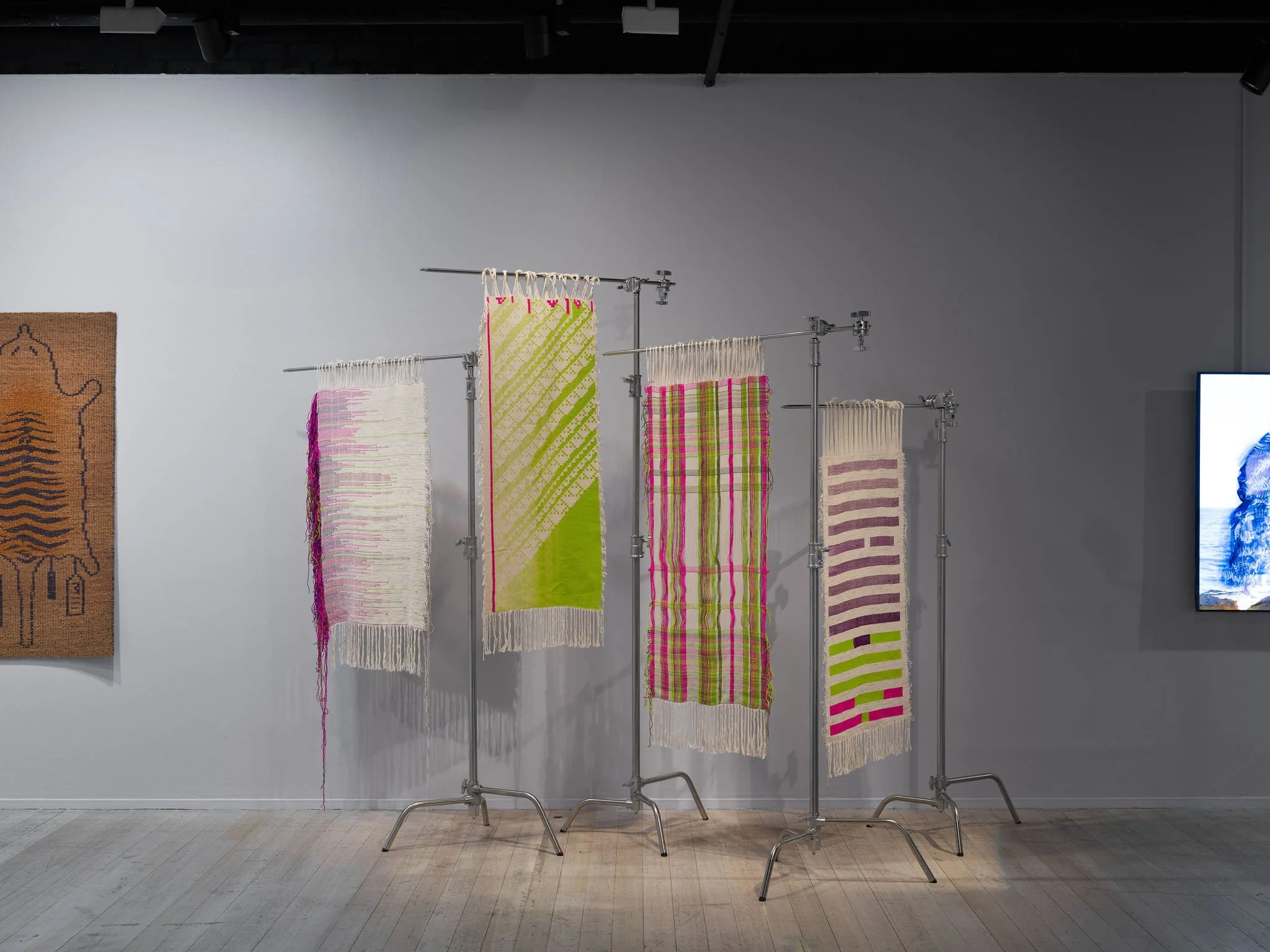
Anisha Sawaid, Wollemi Weave series, 2025, handwoven cotton cloth, textile ink, panels 150 × 61 cm. Courtesy of the artist
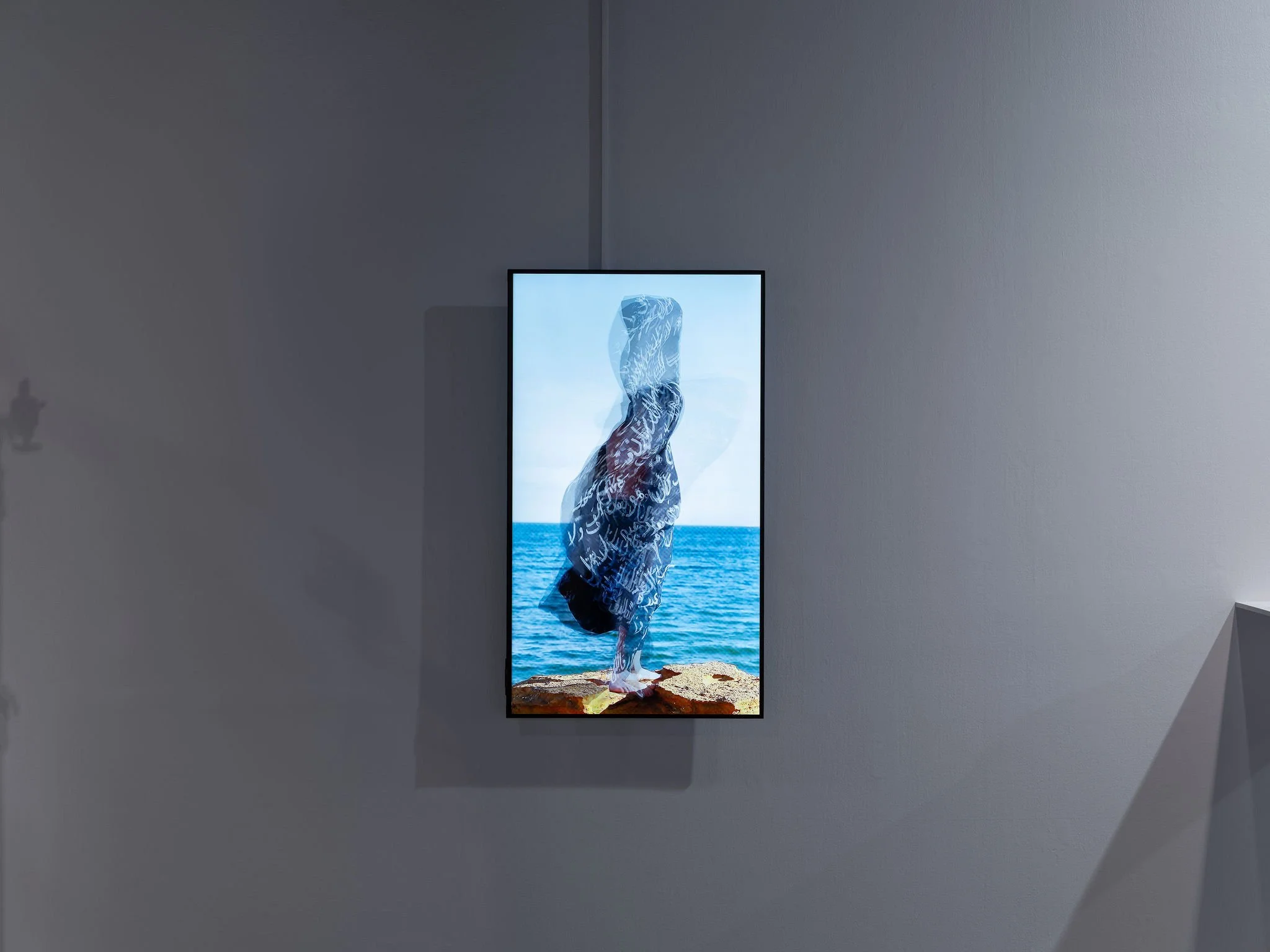
Ayman Kaake, The Black Shroud, 2023, one channel video, Courtesy of the artist and Mars Gallery
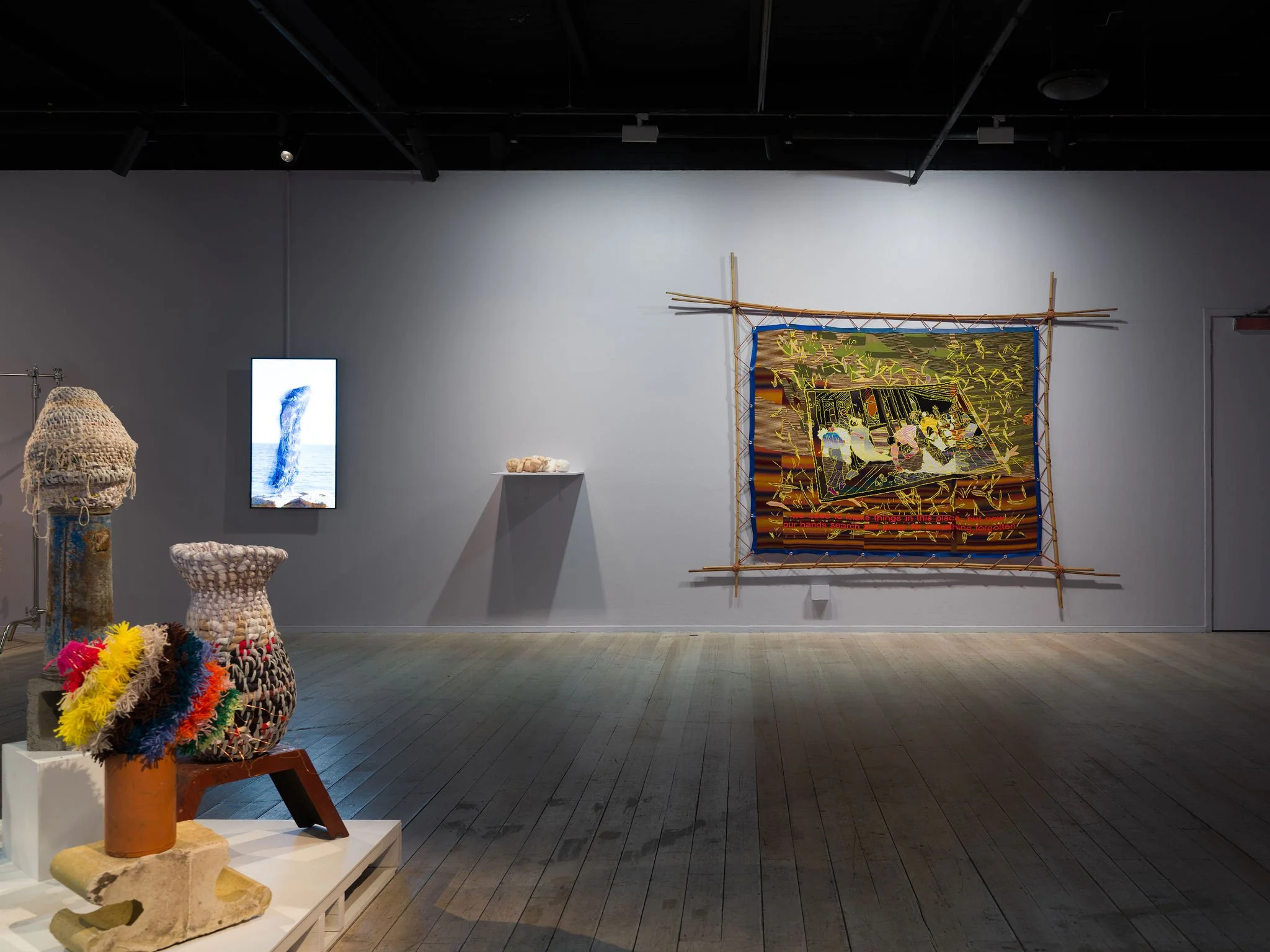
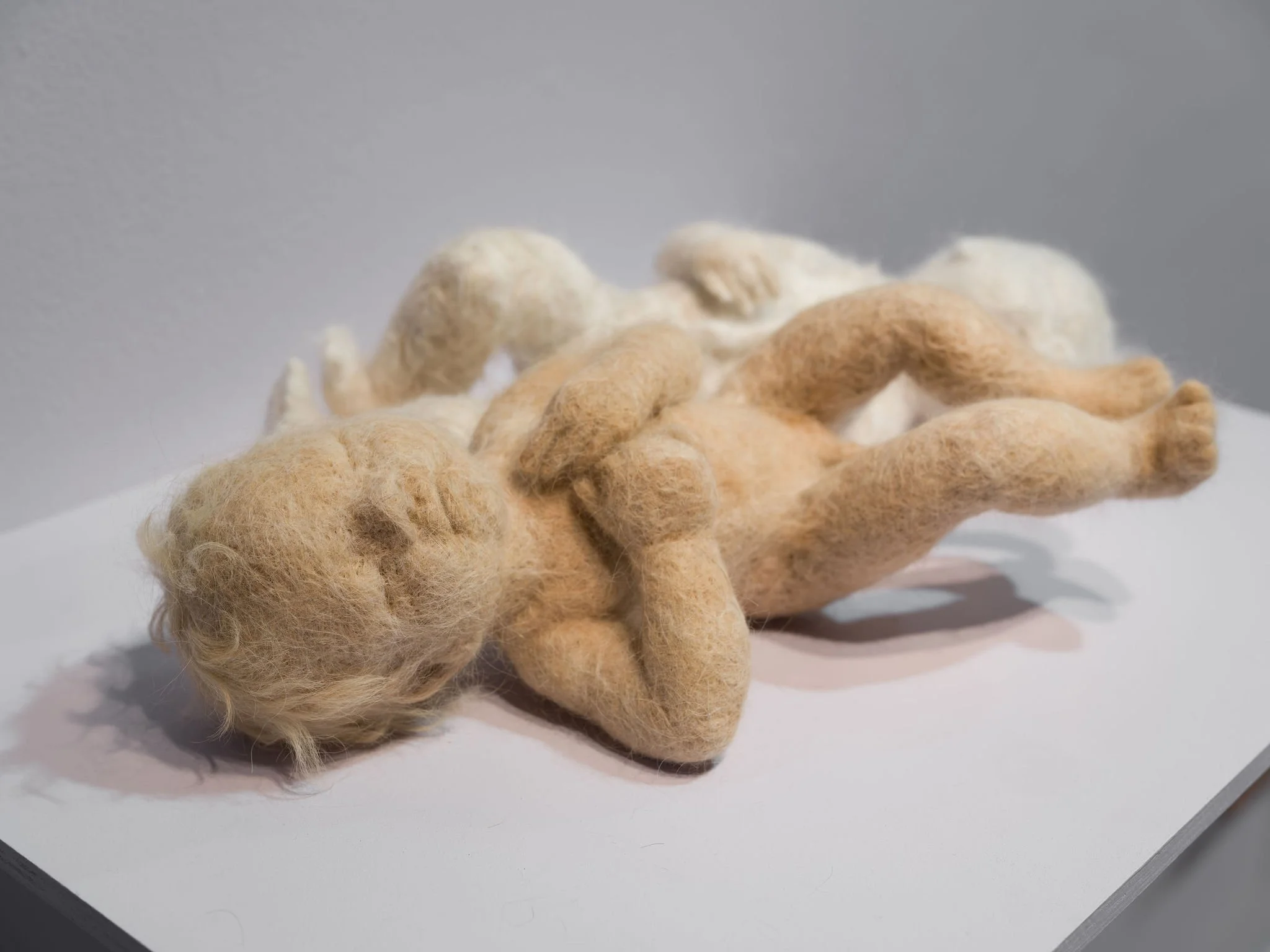
Lisa Rime, Fur Babies, 2023, felted dog fur, dimensions variable. Courtesy of the artist
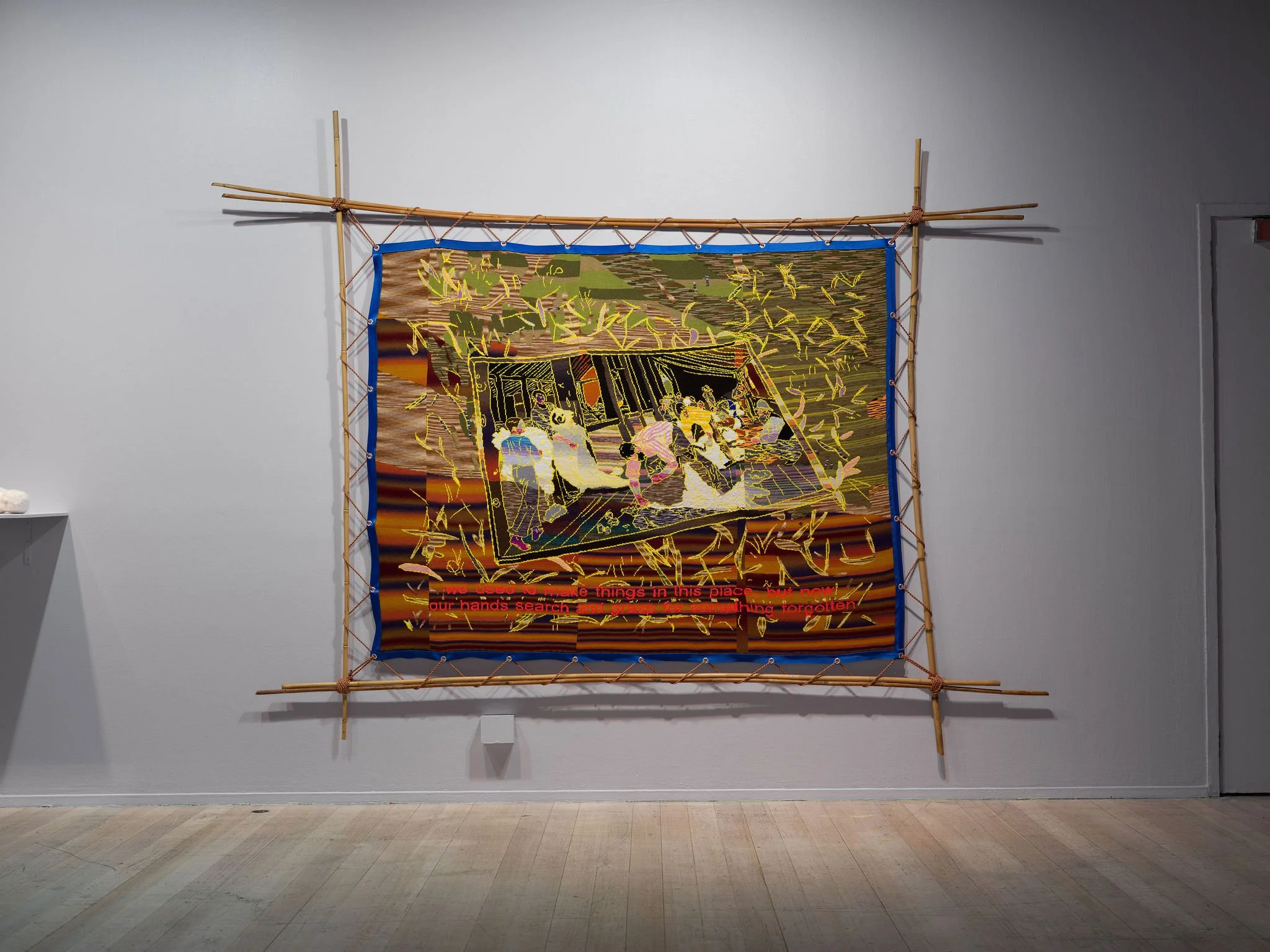
Emma Buswell, A Dream is a Wish your Heart Makes, 2025, knitted wool and lurex yarn, bamboo, nylon strap, lurex, rope, 200 × 270 cm. Courtesy of the artist and AVA
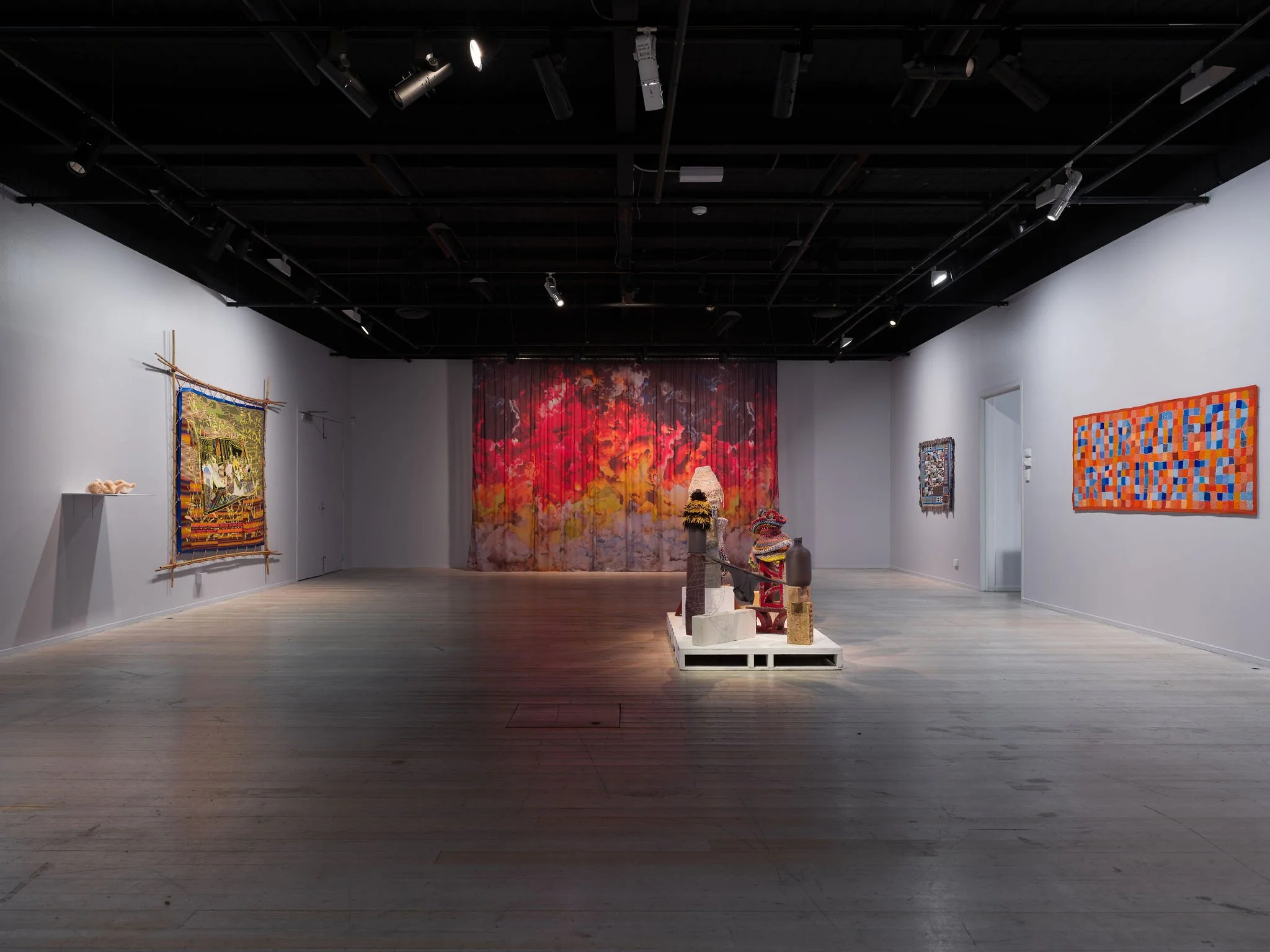
Edges of Existence
Emma Buswell
Hannah Gartside
Beth Hatton
Nadia Hernández
Ayman Kaake
Emma Rani Hodges
Lisa Rime
Anisha Sawaid
Jonny Scholes
Tassie Nannas
Bonni Que
Jemima Wyman
Edges of Existence is an exhibition of contemporary artists working with textiles to reimagine everyday materials as enduring mediums for storytelling, reclamation and soft resistance. Through works that span the intersections of tradition and technology, this exhibition explores ideas relating to identity, labour, value, migration, trade and ecology.
Across generations and geographies, textiles and fibre have shaped material culture and collective human experience, acting as everything from innovator to record-keeper. The poetics and politics of personal and cultural expression and reclamation, and the complex relationships between production, consumption and sustainability, are carried by textile-based practices in local and global settings. The collection of works in Edges of Existence emphasise the enduring capacity of textiles as a lasting medium to carry memory, meaning and social histories across time and place.
Catalog essay: Edges of Existence
Written by Nicole O'Loughlin, August 2026
“If you take your eyes off this page and look down you will see that your body is enclosed in cloth. (I am assuming here, dear Reader, that you are not naked.)” (St Clair,2019, p. xi)
In the Edges of Existence exhibition at Contemporary Art Tasmania fibres are woven, hanging, sculpted, stretched taut, felted, knitted, stitched together and waving in the wind over a body. Regardless of the diverse ways artists have, and continue, to work with fibre, historically it was delegated to a lesser art, domestic, decorative, craft, or women’s work (Hessel, 2022). The hierarchy between paint and thread for example, was determined mainly because of who and where it was made, locking women and people of marginalised communities out of the Western fine art canon (Parker, 2010). However, this demarcation allows women and diverse perspectives to become more potent because of this connection to the feminine (Gipson, 2022). But it is not solely in the way things are crafted by artists but extends to production of textile which is intertwined with politics.
“Their stories reveal wool not only as material, but as witness – holding traces of alteredgeographies, interrupted routes, and enduring relationships between people, animals and land.” (Salous & Vogel, 2026, p. 3)
Colonisation has forced the fabrication and culturally significant needlework to be unravelled, to be stopped, to be appropriated, to be destroyed, to be discounted in the world’s history. I am stitching this essay together on the land of the Muwinina in Lutruwita Tasmania, where we witness the importance of weaving for Palawa women in sustained cultural practice and relationship to country (Gough, 2009). Across cultures, despite displacement and attempted erasure, textile traditions reach back through time to continue embroidered and woven symbols passed down through generations to maintaining strong links with origins (Paine, 1990). Globally stitching and the creation of textiles becomes a political act – an act of resistance by the oppressed.
“Textiles offer a distinct blueprint for the movements and transformations that have taken place with time to shape the hybrid cultures and identities of the present…textiles do not adhere to borders and existed before them.” (Vesters, 2025)
Textiles are not solely present in the physical realm, language, and mythology attest to the importance of fibre in humans’ existence. The words text and textile – both come from the Latin texere to weave (St Clair, 2019).
Within mythology, across many cultures, spinners controlled human destiny, the sisters cutting the thread to determine the length of life. Because of the interwoven nature of textiles, into every facet of our lives, when viewing works made with fibres, I do so with my whole boy, allowing emotions, memories, and senses to influence the reading of the work.
“Sewing pieces of fabric together was believed to endow the pieced cloth with a spiritual power, the needle’s magical strength permeating every join, the more joins, the greater the potency.” (Hunter, 2019)
The artists in this show approach textiles with their own material understanding of working in this medium. They pick up threads of their worlds and insert them into ours. The works confront us with unrest, memory, loss, grief, love, discontent, community, tension and diverse perspectives and experiences.
Emma Buswell uses what has been discarded as inspiration – a hyper saturated palette echoes the colours of the Australian bush. She uses a familiar painting, linking to the colonial industrialisation of the land. In the tautness of the work, stretching it on the to frame, Buswell’s work reinforces Australiana’s culture stretched to its limits.
Hannah Gartside’s leather gloves are arranged in an intimate moment. The appendages looping through holes, intertwining together. A sense of touch, the hands and fingers arranged wrestling and caressing. The anthropomorphism of these inanimate objects creates sense of play, and voyeurism into intimacy.
Beth Hatton’s work asks us to consider animals’ species discarded. The work feels poignant and relevant today, extinct animal floor rugs ready to wipe our feet on as we enter the collapse of the world as we know it. For me, the coarse wool feels itchy to my skin, reinforcing the message of an uncomfortable sense of grating or unease.
Nadia Hernandez uses textiles combined with paint in a bold, layered way that embraces the weight and tension of cloth. It hangs over us, above us, more than the body. In her installations she uses text, patterns, motifs, and silhouettes backed by gestural drawings. The floating cloud shapes foreshadowed with the poetic words of her family to fabricate new understanding and meaning.
Jemima Wyman’s immersive draping cloth, collaged with smoke from protests around the world, evokes a bodily memory of burning and tear gas. Yet the way she arranges them, creating a camouflage of unrest, invites me to walk into the cascading cloth, to immerse into the clouds of the glowing world on fire.
Both Lisa Rime and Ayman Kaake remind us that textiles carry us into and out of this world. Rime fashions baby sculptures from discarded dog hair, lying in a foetal position resting together. In the gentleness of the sculptures, we can also reflect on loss, the cathartic act for Rime that occurred making the works as her dog passed away. She plays with the softness of the fur, combined with the confrontation of newborns frozen in time.
Kaake’s video installation links to stories untold, a reconciliation and healing of past using cloth. Using the fabric as both substitute as a death shroud but also an embodied weight of culture and mourning. The black fabric adorned with poetic Arabic script, flaps and wraps around the body, the elements of the wind creating a battle between body, memory, longing, culture, and justice.
Both Anisha Sawaid and Jonny Scholes use weaving linking to data and computer-generated information, albeit in vastly separate ways. Sawaid’s work is a poetic marriage between science and art but also connecting to her own Bedouin Palestinian heritage. Her work acts as slow reckoning to resilience and survival both through the content highlighting Wollemi Pine resilience and cultural hand crafted practices. Hung on the metallic railings, they provide a platform to view them as specimens and things to be examined.
Scholes use of AI to collate global news into tapestries is also in conversation with Wyman’s work. The hazy machine-made tapestries reiterate the static of a screen, like the never-ending doom scroll or news feed, digested by a programmed AI system to decide what is worthy and what is not. His work links to power structures, and how tapestries were once created by the affluent and dominate culture and to immortalise their chosen knowledge and narratives.
Textile practice as an active resistance, healing and reconciliation is something that happens across the globe. Emma-Rani Hodges-Vanitlertpibon’s quilted banners embody her collaboration with community members. The cascading piecemeal fabrics show what it is to be a part of a community, with diverse voices represented but also that there are no straight and defined edges within belonging.
Bonni Que’s vessels woven and sculpted from found materials come together as a collective, interspersed with other items. A stretched pair of stockings balances in between hard and soft. Reminding us again of our bodies, intimacy, the body as a vessel with its conflicting softness, roughness, and interwoven histories.
The Tassie Knitting Nannas persistence and dedication is emblematic of textiles as a political act. I often see them sitting in the mall in Nipaluna/Hobart knitting and displaying their banners advocating for refugees. They are akin to Madres de Plaza de Mayo, I saw in Argentina, with embroidered (with the names of the missing family members) white head scarves, peacefully seeking justice. The women in Knitting Nannas fundamentally understand the practice of resistance, slowness, patience, and persistence to bring light to social justice causes.
“The yarning or quilting circle, sewing bee or “stitch and bitch” are emblematic of the of the simultaneity of weaving and oral traditions. These spaces diametrically oppose the singular phallogocentric of mainstream cultural transmission: they are feminine, circular, lateral, reciprocal and plural”. (Yore, 2025, p. 106)
Edges of Existence asks you to consider these works in relation to your understandings, what memory and sensory underpinnings you bring to the experience. Artists working with textiles interweave their own DNA into the works, the duty of care that comes from making something in textiles is a sacred act, one that links to healing and reclaiming.
Artists working in textiles, like the ones in this show, bring with them a long history of material knowledge, patience, and slowness. In today’s screen based, algorithmic saturation of information and mainstream culture, textile practice is fundamental to realigning with an interconnectedness.
References:
Gipson, F. (2022). Women's Work, From feminine arts to feminist art Frances Lincoln
Gough, J. (2009). Fibre across time: a history of Tasmanian Aboriginal women's fibrework. In tayenebe, Tasmanian Aboriginal women's fibre work (pp. 3–38). Tasmanian Museum and Art Gallery.
Hessel, K. (2022). The Story of Art Without Men. Hutchinson Heinemann.
Hunter, C. (2019). Threads of Life, A History of the Wrold Through the Eye of a Needle. Spectre.
Paine, S. (1990). Embroidered Textiles: Traditional Patterns from Five Continents with a Worldwide Guide to Identification.
Parker, R. (2010). The Subversive Stitch: Embroidery and the Making of the Feminine. I.B. Tauris.
Salous, L., & Vogel, S. (2026). To Felt Wool in Palestine.
St Clair, K. (2019). The Golden Thread, How Fabric Changed History. John Murray
Vesters, C. (2025). INTERWOEVEN HISTORIES. Contemporary Art, Migratory Narratives and Textiles. nai010.
Yore, P. (2025). Let us not die from habit. In Radical Textiles. Art Gallery of South Australia.
Other suggested reading:
Craftivism: The Art of Craft and Activism, Betsy Greer, 2013
Feminist Subjectivties in Fiber Art and Craft, Shadows of Effect, John Corso Esquivel, 2019, published by Routledge.
The Textile Reader, edited by Jessica Hemings, 2012, published by Bloomsbury
Textile Fine Art, Helen Adams, 2025, Laurence King
TEXTILES X ART, How textiles are shaping contemporary art, Ramona Barry, Beck Johnson, 2025, Thames and Hudson
Emma Buswell
Emma Buswell is an artist, curator and facilitator whose practice explores systems of government, economies and culture in relation to place, identity and community. Drawing on matrilineal handcraft traditions and knitting techniques passed down through family, her work investigates kitsch, ephemera, labour, national identity and class politics. Working predominantly in knitting, beading and crochet, she collapse the space between craft and cultural expression, foregrounding the gendered nature of cultural production.
In 2026, Emma is undertaking a Creative Fellowship supported by CITSWA, pursuing residencies nationally and internationally. In 2025, their work The Pool won the People's Choice Award at the Ramsay Art Prize; where they were also a finalist in 2023 and 2025. Further accolades include the 2022 Joondalup Invitational Art Prize and Highly Commended at the Churchie Art Prize.
Her work is held in the collections of Artbank, the Art Gallery of Western Australia, and the University of Western Australia.
Hannah Gartside
Hannah Gartside works across kinetic sculpture, installation and quilt-making. Characteristically sensual and poetic, her works transform and in some cases animate, found fabrics and clothing and ephemera to articulate experiences and sensations of longing, tenderness, care, desire and fury. Her solo presentation Bunnies in Love, Lust and Longing at Melbourne Art Fair (February, 2025), received the Richard Parker Award. Recent commissions include Forest Summons (for Lilith) at the Ian Potter Centre: National Gallery of Victoria for Melbourne Now, 2023, and Loie, Lilith, Sarah, Pixie and Artemisia for Primavera 2021: Young Australian Artists at the Museum of Contemporary Art.
In 2024, Gartside was a recipient of an Anne & Gordon Samstag International Visual Arts Scholarship, from the Samstag Museum, University of South Australia. She will commence an MFA in Europe in late 2025. Her sculpture #19 (Series: Bunnies in Love, Lust and Longing) was the winner of the Woollahra Small Sculpture Award in 2024.
Gartside has undertaken residencies at Australian Tapestry Workshop, Melbourne (2020) and in California at the Varda Artist Residency (2017). Gartside received a Bachelor of Fine Art (Sculpture) Honours from University of Melbourne, Victorian College of the Arts, in 2019, and a BFA (Fashion Design) Honours from Queensland University of Technology in 2010. Prior to her visual art training, Gartside worked as costume-maker and dresser for five years, mainly on productions for Queensland Ballet. Her work is held in the collections of Wangaratta Art Gallery, Wesfarmers, Ararat Gallery TAMA, Darebin City Council, MECCA and Artbank. She is represented by Tolarno Galleries.
Beth Hatton
Beth Hatton lives and works in NSW, on the Gadigal land of the Eora people. In 1982 she was awarded a Postgraduate Diploma in Professional Art Studies at COFA Sydney. Her textile works have been exhibited across Australia and overseas (Japan, Germany, America), received numerous awards, and are represented in major public collections including the National Gallery of Australia and the Mint Museum of Craft + Design in the USA.
Nadia Hernández
Nadia Hernández is a Venezuelan-born, Melbourne-based multidisciplinary artist whose practice critically engages with themes of memory, memorialisation, identity, and place within a socio-political context. Drawing upon her lived experience as a woman situated within and beyond the Venezuelan diaspora, Hernández’s work challenges dominant narratives surrounding migration, exile, and displacement.
Central to Hernández’s approach is a commitment to collaboration and community engagement. She creates works that are polyphonic in nature, drawing from song, poetry, conversation, and storytelling, where family, friends, and local Venezuelan communities often become active participants. These shared processes unfold across multiple registers: visual form, collective learning, dialogue, and archival research.
Her sustained and critically engaged practice is evidenced by significant achievements, including her selection for the 2024 Fountainhead Residency in Miami, a major public commission for the Oslo Freedom Forum in partnership with the Human Rights Foundation, and finalist positions for the Ramsay Art Prize (2023) and the Sir John Sulman Prize (2023, 2024). Her work has been presented in major exhibitions such as the 2022 Macfarlane Commissions at ACCA, the 2025 TarraWarra Biennial, and Art Basel Hong Kong’s Encounters sector.
Ayman Kaake
Ayman Kaake is a Lebanon-born, Naarm/Melbourne-based photo-media artist working across photography, video and installation. His practice explores diasporic identity, memory and queer experience through staged, cinematic imagery that blurs reality and fiction. Drawing on personal and political histories, his work reflects on displacement, belonging, and the intersections of religion and power.
Emma Rani Hodges
Emma Rani Hodges lives and works on the unceded lands of the Ngunnawal and Ngambri peoples. Their practice navigates intergenerational trauma, community building, migration and multiethnic identity. They do this through found object assemblage, textile and storytelling. Fluctuating between image, text and object Hodges’s work resists easy categorisation. They use ambiguous materiality to examine social boundaries, and to explore feelings of ‘otherness’. Hodges’s work utilises their feelings of otherness to create new self-knowledge, while acknowledging that the existence of the ‘other’ depends on specific political conditions that influence relationships between marginalised bodies and society.
Lisa Rime
Lisa Rime is a Nipaluna based visual and performing artist. As someone living in communities at the intersections of disability, race, gender and class, Rime makes work that is guided by her ongoing curiosity and drive for social responsibility and community care.
In recent years Lisa has exhibited at MAC and SOCIAL, as part of Outlier Studio, and also in group exhibitions for the Disability Commissioner Tasmania, Women’s Health Tasmania, RANT Arts and Lutruwita Activist and Mutual Aid Collective.
Rime views felting as a soft, warm, feminine craft with interesting technical challenges. Her works are made through a process called felting, involving many hours of stabbing fibre with a sharp barbed needle. Like living with chronic illness, felting can be meditative, introspective, intimate and regularly painful. However the result can also be light and soft.
Anisha Sawaid
Anisha Sawaid is an emerging designer based on Gadigal land. Weaving forms the core of her practice, examining the slow, meticulous craft and its links to nature, culture and technology. Her recent works reimagine traditional weaving techniques and motifs through a more technological lens by using code to translate data sets. This dialogue between ancestral practices and digital systems offers space for hands-on experimentation and new discoveries. Sawaid’s upcoming research and body of works begin to dive into her Bedouin-Palestinian heritage to strengthen the diasporic connection with her cultural identity and family roots. As her practice evolves, Sawaid continues to ground her work in design thinking and strengthening technical skills in weaving practice.
Jonny Scholes
Jonny Scholes is a multidisciplinary artist with work that encompasses installation, sculpture, painting, new media and street art, each linked through an interest in digital geopolitics and the rapid integration of technologies into society. Informed by his knowledge in coding and digital systems, Scholes’ work draws attention to the abstract nature of hidden digital mechanisms that now influence our social systems and shape the physical world.
Scholes co-presented a Blocked Duwar at the Sydney Biennale in 2026 and exhibited as part of Hobart Current in 2025. Recent solo exhibitions include Lost Bedrooms at Schoolhouse Gallery and Interpreted at Social, which was featured in Vault Magazine’s Forecast section in 2023. Recent commissions include new work for Mona Foma, Dark Mofo, Contemporary Arts Tasmania and Arts Tasmania. Scholes has also participated in numerous group shows, including artistic collaborations in Melbourne, Adelaide and Bristol (UK).
Tassie Nannas
Hobart grandmothers, ashamed and horrified by Australia’s offshore detention of refugees who came by boat, including children like our grandkids, formed Tassie Nannas in August 2014.
In 2015 we began knitting in Elizabeth Street Mall, making squares for blankets for refugees arriving in Tasmania — a friendly, low-key protest: chatting with interested passers-by and encouraging them to sign postcards advocating better refugee policies. We’ve sent thousands to the PM and others.
We’ve knitted bling at Mona Foma, held a stall at The Taste, visited schools, rallied and demonstrated, done media, lobbied politicians and taken a banner to Canberra as part of the successful ”Kids Off Nauru” campaign. With Hobart City Council we helped release refugees held in Melbourne’s Park Hotel by highlighting their conditions nationally. When the Labor government sent the Biloela Family “Back to Bilo” we celebrated. Sadly, they’re now sending refugees to Nauru again.
Bonni Que
Bonni Que is an emerging artist based in Nipaluna/Hobart. Her practice explores the tension between sincerity, cynicism and satire, working across textiles, painting, video, photography and sculpture. Through material experimentation and tactile making, she explores ideas around narrative, identity and cultural meaning, often using discarded and resourced everyday objects as starting points for creative investigation. With a background in art therapy and community arts, Bonni is interested in how cultural norms shape the way we understand ourselves and influence what we create.
Jemima Wyman
Jemima Wyman is a Palawa woman who lives and works in Los Angeles. Wyman’s practice focuses on visual resistance used in global protest. Wyman has been exhibiting in Australia and internationally since 1996. Recent solo exhibitions
include Deep Surface, a 30-year survey exhibition at Queensland University of Technology (touring to Samstag Museum of Art and UNSW), Sullivan + Strumpf, Australia (2024,2023,2021, 2019) and Commonwealth and Council, LA (2022, 2018). The artist was awarded the Wangaratta Contemporary Textile Award (2025) and the City of Los Angeles Department of Cultural Affairs Master Artist Grant (2024). She has exhibited in group exhibitions at Frieze No. 9 Cork Street, London and ArtCenter College of Design, Los Angeles. Wyman’s work is held in collections, including the Whitney Museum of Contemporary Art New York, Museum of Contemporary Art in Sydney, National Gallery of Australia and the 21st Century Museum of Art, Japan.